Epicurus and Tranquility of Mind: A Philosophy of Calm
Epicurus made tranquility of mind the heart of his thought. This article explores ataraxia, sober pleasure and simple daily gestures for cultivating calm.
In short — Epicurus taught that tranquility of mind comes from recognising what depends on us, lightening unnecessary desires and savouring simple pleasures. His idea of ataraxia, freedom from disturbance, is cultivated through small daily gestures rather than grand methods.
Tranquility of mind is not a luxury reserved for hermits. Epicurus, a Greek philosopher of the 4th century BCE, made it the heart of his thought: learning to soothe inner turmoil, to distinguish what depends on us from what escapes us, and to simply savor what is there. This wisdom, often wrongly reduced to a search for easy pleasure, actually offers a gentle discipline of calm. It is in this spirit that the Sonocrea line approaches cultural sound relaxation: not as a promise of performance, but as an invitation to slow down, rooted in literature, music, and philosophy.
Epicurus, a philosopher of the serene everyday
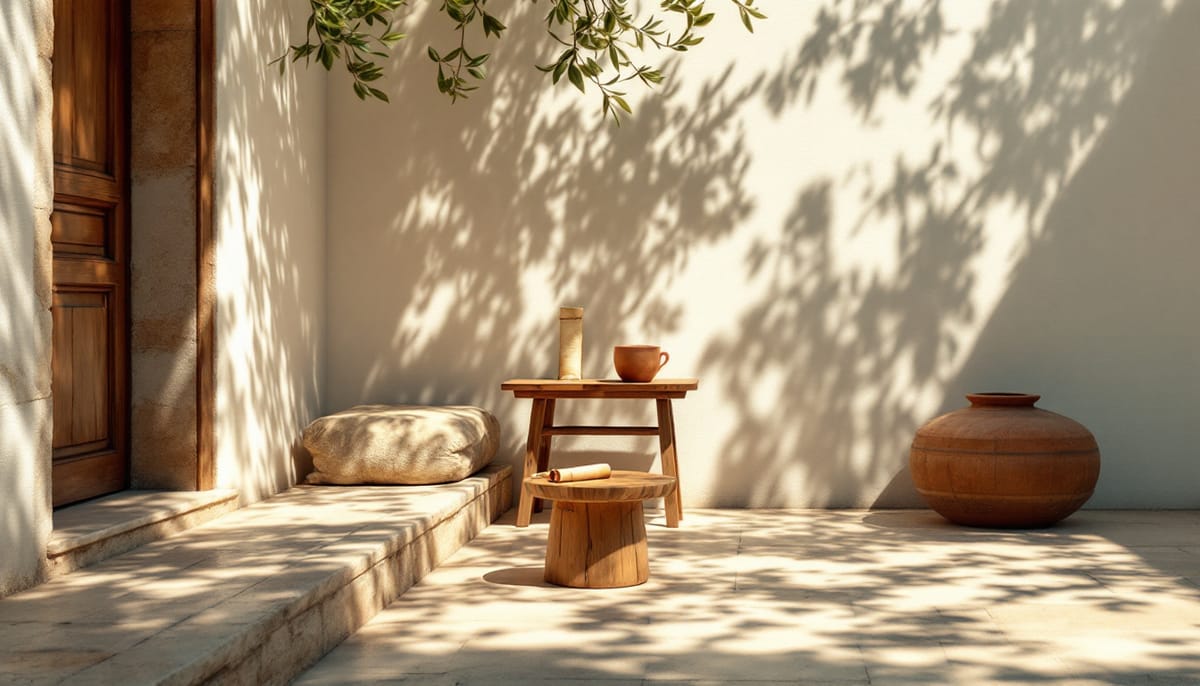
Epicurus founded his school in a garden in Athens, where people came to converse, read, eat simply, and cultivate friendship. Nothing spectacular: the setting was modest, the meals frugal, the discussions patient. This image of the "Garden" says much about his philosophy. Calm there is not an escape from the world, but a way of inhabiting the world with less agitation.
His thought rests on a few simple and concrete ideas. First, nature wishes us neither good nor ill: understanding this helps to defuse certain fears. Next, our desires fall into several families: some are natural and necessary, others natural but not necessary, and others neither. Learning to recognize this difference considerably lightens the burden we carry. Finally, friendship and regular conversation occupy a central place: calm is also cultivated with others.
This approach is nothing like a miracle method. It is an intellectual hygiene of life, an attention paid to the present, to what is available without excessive effort. For anyone today seeking reference points for relaxation, it offers an elegant and sober framework, far from noisy promises.
Ataraxia: understanding tranquility without confusing it with the absence of emotion
The word often associated with Epicurus is ataraxia, which is translated as tranquility or freedom from disturbance. It is not about being insensitive or indifferent. It is about no longer being tossed about by worries that keep returning, about recovering a form of inner stability.
This tranquility is built in small touches:
- Recognizing worry without fighting it head-on, simply by naming it.
- Returning to the concrete: what I can do now, what is within my reach.
- Reducing the superfluous: fewer solicitations, less noise, more space.
- Cultivating regularity rather than intensity: a calm ritual is worth more than a sporadic effort.
Here we find an intuition shared by many wisdom traditions around the world, each with its own vocabulary. Cultural sound relaxation follows the same approach: offering a soothing sound framework, inspired by texts and philosophical traditions, to accompany a moment of pause without promising anything other than that moment itself.
Pleasure rightly understood: sobriety and presence
Epicurus is often caricatured as a defender of immediate gratification. This forgets that his conception of pleasure is first and foremost a conception of measure. The pleasure he values is the one that is not accompanied by disturbance: a pleasant conversation, a simple shared meal, reading, walking, contemplating a landscape. In other words, a pleasure that does not afterward create lack or agitation.
This idea has a very practical scope. It invites us to ask, before each activity: does this soothe me or does this agitate me? This question, asked with kindness, helps to sort what deserves our attention. It also sheds light on how we choose our moments of relaxation: favoring gentle atmospheres, reasonable durations, content that does not overstimulate.
In this perspective, a sound relaxation session is not a performance to succeed at. It is a time offered to presence: listening, breathing, letting thoughts pass without holding on to them. The sobriety of the setting is part of the pleasure.
A philosophy of calm to live by every day
How can this wisdom be translated into an ordinary day? Without grand devices, with a few simple and repeated gestures.
Creating thresholds
Moving from one activity to another without transition sustains agitation. A short moment of calm between two tasks, a few minutes of silence or a gentle sound atmosphere, allows us to set down what has just happened before approaching what comes next.
Choosing content that soothes
Reading, music, and philosophical narratives offer calm material. Listening to a text inspired by the world's wisdom traditions, carried by a composed voice and a discreet sound environment, is a concrete way to nourish tranquility of mind. The scripts offered by Sonocrea are original, inspired by these traditions, without word-for-word quotation: they offer a journey, not a lesson.
Reducing unnecessary noise
Epicurus recommended not letting oneself be invaded. Today, this can mean turning off notifications during a meal, walking without headphones, or simply closing off a room to silence. These gestures are not part of an austere discipline: they give back space.
Cultivating friendship and conversation
Calm is not solitary by nature. Talking without haste, truly listening, sharing a simple moment: these exchanges soothe. Sound relaxation can also be experienced as a pair, in the same space, without any obligation to speak.
Cultural sound relaxation, another way of listening
The cultural sound relaxation offered by Sonocrea stands out for its grounding: literature, music, philosophy. It is not a neutral sound background, but a composition that combines inspired speech and a crafted musical environment. The goal remains modest and clear: to offer a moment of comfort and relaxation, in an elegant setting.
This approach meets the spirit of Epicurus on an essential point: the quality of attention. Truly listening, without doing something else at the same time, changes the nature of the moment. We are not trying to fill a void, but to inhabit a space. It is a form of happy sobriety, accessible to anyone who simply wishes to slow down.
To discover these atmospheres and narratives, you can explore Sonocrea's offerings and choose the moment that suits you, without any particular expectation. Tranquility often comes from what is not demanded.
Conclusion: calm within reach
Epicurus did not promise a life without difficulty, but a lighter way of moving through difficulties. His philosophy of calm comes down to a few gestures: recognizing what depends on us, lightening the superfluous, savoring the present, cultivating connections. Nothing extraordinary, and that is precisely what makes it usable.
If you would like to extend this reflection through a concrete experience of relaxation, you can discover the cultural sound relaxation sessions at https://sonocrea.com and give yourself a few minutes of pause, in the spirit of Epicurus's Garden: a simple space, composed speech, a moment that demands nothing other than your presence.
Precaution: do not listen while driving; in case of epilepsy or psychiatric disorders, seek medical advice.
Frequently asked questions
What is ataraxia in Epicurus's philosophy?
Ataraxia is translated as tranquility or freedom from disturbance. It does not mean being insensitive or indifferent, but no longer being tossed about by returning worries and recovering a form of inner stability, built through small, regular gestures.
Did Epicurus encourage easy pleasure?
No. His conception of pleasure is first and foremost one of measure. He values pleasures not followed by disturbance, such as conversation, a simple meal, reading or walking, rather than immediate gratification that later creates lack or agitation.
How can Epicurus's philosophy of calm be applied every day?
Through simple repeated gestures: creating short thresholds between activities, choosing content that soothes, reducing unnecessary noise such as notifications, and cultivating friendship and unhurried conversation. Calm is not solitary by nature and is also shared with others.
Read also
Découvrez Sonocrea
Créez vos propres séances de bien-être sonore avec notre IA. Fréquences binaurales, hypnose audio et sons ambiants personnalisés.
Essayer gratuitement →