Sound Relaxation and Sports Recovery: A Cultural Approach to Wellbeing
Explore how sound relaxation, inspired by cultural traditions, can complement athletic recovery through binaural beats, nature sounds and simple listening routines.
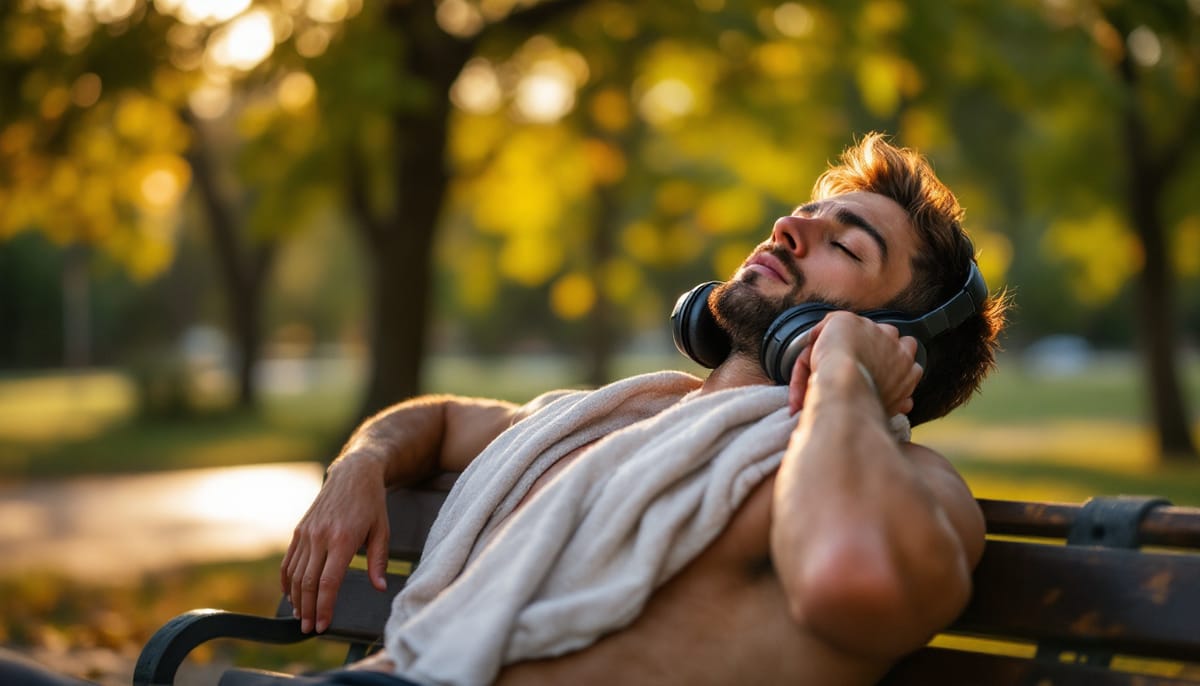
In short — Sound relaxation uses binaural beats, nature sounds and slow music to create calm conditions that may support physical and mental recovery after sport. It complements sleep, nutrition and stretching rather than replacing them, and needs only headphones and a quiet space.
After intense training or competition, recovery is a fundamental pillar of athletic wellbeing. While nutrition, sleep, and stretching are well known to athletes, a complementary approach is gaining ground in the world of sports: sound relaxation. Let's explore how this practice, inspired by cultural traditions and world wisdom, can accompany physical and mental recovery.
Understanding the mechanisms of sports recovery
Sports recovery is a complex process that engages the entire body.
To recover effectively, it must shift into a state of rest and regeneration.
It is precisely at this level that sound can play a significant role. Certain auditory stimulations have the ability to create favorable conditions for optimal recovery.
The markers of good recovery
- Sleep quality: a crucial phase of tissue regeneration
- Restoration of mobility: a feeling of ease and suppleness
Cultural perspectives on sound and athletic performance
Cultural traditions around the world have long used sound to accompany moments of rest and recovery. Many wisdom traditions offer insights on this subject.
Binaural sounds and relaxation
Binaural sounds, those slightly different frequencies played in each ear, are receiving particular attention. Practitioners suggest that binaural beats in the theta range (4-8 Hz) may encourage a state of deep relaxation conducive to regeneration.
Sound vibrations and muscle tension
Other approaches explore the effect of acoustic vibrations on muscle tissue. Although this field still requires in-depth investigation, preliminary observations indicate that certain low frequencies could promote muscle relaxation and a feeling of local warmth.
The different types of sounds beneficial for athletes
Not all sounds are equal when it comes to recovery. Here are the most studied categories and their specific applications for athletes.
The sounds of nature
Research from the University of Sussex revealed that these sounds reduce the body's stress response and promote a state of relaxation.
For athletes, integrating these soundscapes into the post-training routine can facilitate the transition to a state of active recovery.
Specific frequencies
- Low frequencies (40-60 Hz): associated with deep muscle relaxation
- Alpha frequencies (8-12 Hz via binaural beats): promote a state of calm alertness
- Theta frequencies (4-8 Hz): induce deep relaxation close to meditation
Suitable musical compositions
Music with a slow tempo (60-80 BPM), simple melodies, and consonant harmonies proves particularly effective. These musical characteristics naturally synchronize heart and breathing rates toward resting values.
Applications such as Sonocrea offer sound environments specially designed to accompany these moments of recovery, combining different sound approaches validated by research.
Integrating sound relaxation into your sports routine
Putting this knowledge into practice does not require sophisticated equipment. Here is how athletes can concretely benefit from sound to optimize their recovery.
Optimal timing
The most favorable moments for sound relaxation are:
- Immediately after training: during the 15-30 minutes following exertion, to accelerate the return to calm
- Before bedtime: to prepare for restorative sleep, a crucial phase of recovery
- Between two sessions: on active recovery days
Ideal conditions
To maximize the effects of sound relaxation, a few simple conditions are recommended:
- Use quality headphones for optimal immersion, especially for binaural sounds
- Choose a quiet environment where you will not be disturbed
- Adopt a comfortable position, lying down or semi-reclined
- Close your eyes to strengthen auditory focus
- Start with sessions of 15 to 20 minutes, then adjust according to your needs
Combine with other techniques
Sound relaxation becomes more effective when combined with other recovery practices:
- Deep breathing: synchronize your breathing with soothing soundscapes
- Gentle stretching: practice light stretching accompanied by relaxing sounds
- Positive visualization: use sound as support for sports visualization exercises
Testimonials and practical applications in high-level sport
Many professional athletes now integrate the sound dimension into their preparation and recovery. Without claiming miraculous effects, these practices are part of a holistic approach to athletic well-being.
In training centers
Some advanced sports centers have set up sound recovery spaces, equipped with immersive audio systems. Athletes regularly spend time there after intensive sessions, reporting an improvement in their feeling of recovery.
Autonomy through applications
The accessibility of sound relaxation applications allows every athlete, regardless of level, to benefit from these tools. Sonocrea, for example, offers a library of sounds and soundscapes suited to different recovery needs, accessible at any time on a smartphone.
A complementary approach
It is essential to emphasize that sound relaxation is a complement to traditional recovery methods and not a substitute. It fits harmoniously into a routine including adapted nutrition, hydration, quality sleep, and appropriate medical follow-up.
Conclusion: toward more complete recovery
Cultural wisdom and wellness practitioners have long observed that sounds can influence our state of being. For athletes seeking to optimize their recovery, sound relaxation represents a promising, accessible path with no adverse effects.
Current research, although still developing, paints an encouraging picture.
By consciously integrating moments of sound relaxation into your training routine, you give your body and mind the optimal conditions to regenerate. Whether you are a high-level athlete or a passionate amateur athlete, this caring approach deserves to be explored.
Ready to discover how sounds can transform your sports recovery? Explore the sound worlds of Sonocrea and start today integrating sound relaxation into your sports wellness routine.
Sonocrea is a relaxation and comfort tool, not a medical device: it does not replace medical advice or care. Do not listen while driving or during any activity that requires alertness. If you have epilepsy or a psychiatric condition, ask a doctor first.
Frequently asked questions
What sounds are best for sports recovery?
The article highlights nature sounds, low frequencies around 40 to 60 Hz, alpha and theta binaural beats, and slow music of 60 to 80 BPM with simple melodies and consonant harmonies, which naturally synchronise heart and breathing rates toward resting values.
When should athletes practise sound relaxation?
The most favourable moments are immediately after training, during the 15 to 30 minutes following exertion, before bedtime to prepare for restorative sleep, and between two sessions on active recovery days. Sessions of 15 to 20 minutes are suggested to begin with.
Read also
Découvrez Sonocrea
Créez vos propres séances de bien-être sonore avec notre IA. Fréquences binaurales, hypnose audio et sons ambiants personnalisés.
Essayer gratuitement →