Libraries and Sound Relaxation: A New Cultural Offering
Libraries are adding sound relaxation to their cultural programme: readings, music and intentional silence, offered as a calm collective experience rather than a wellness practice.
In short — Sound relaxation in libraries is a cultural offering combining readings aloud, instrumental music and intentional silence in a quiet room. It extends the library's mission of access to culture and calm, without any esoteric or commercial wellness dimension.
Entering a library is already a way of slowing down. You push open a door, leave the noise of the street behind, and step into a place where time seems suspended. In recent years, some libraries have added a new dimension to this experience: sound relaxation. Neither a concert, nor a lecture, nor an esoteric meditation workshop, it is a cultural offering in its own right, one that naturally extends the mission of these places: to provide access to reading, music, and ideas, and to offer a space of calm in an often saturated daily life.
This trend is part of a broader movement: libraries and media libraries are no longer merely places for borrowing, but third places where people work, meet, and rest. Sound relaxation finds a coherent place there, because it is based on cultural content: texts read aloud, carefully chosen music, philosophical reflections.
Why sound relaxation is entering the library
The library is a place of calm, but it is also a place of noise: whispers, keyboards, book carts, slamming doors. The contrast between the expected hushed atmosphere and the sonic reality of a public space is sometimes disconcerting. Offering sound relaxation sessions means acknowledging that acoustic comfort is part of welcoming the public.
Several factors explain this enthusiasm:
- A demand for calm: after years of constant digital demands, the public is looking for spaces of gentle disconnection, with no obligation to perform.
- A mission of cultural education: having people listen to a short story, a poem, an excerpt from a novel, or a piece of music is a way of passing on a heritage.
- An openness to all audiences: teenagers, students, retirees, parents, isolated individuals. Sound relaxation requires neither skill nor special equipment.
- Complementarity with the existing offering: book clubs, literary naps, writing workshops, screenings. Sound relaxation fits in without competing with them.
In this context, sound relaxation is not a "wellness" activity in the commercial sense of the term. It is a cultural experience that uses sound as its medium, just as an exhibition uses images.
How a session unfolds in a library
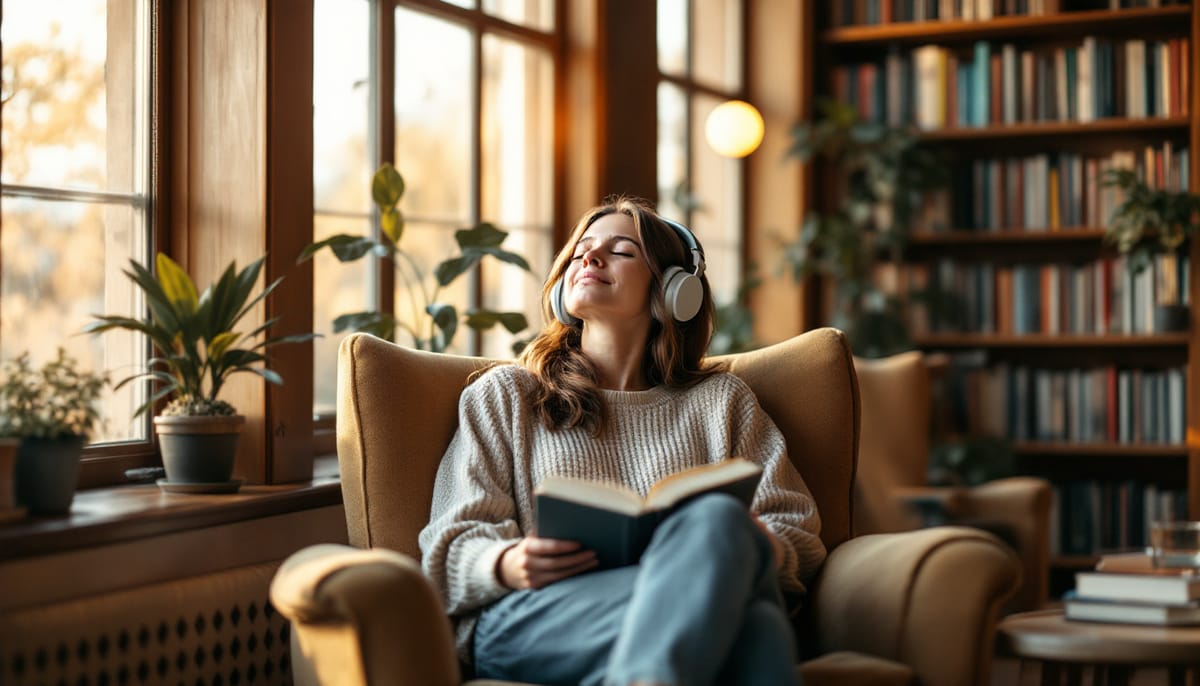
Formats vary from one institution to another, but a common structure often emerges. A session lasts between thirty and sixty minutes, in a quiet room, often outside peak hours. Participants settle into armchairs, recliners, or simply comfortable chairs. Headphones may be provided, or the sound may be played through speakers placed around the room.
The content is prepared in advance by the librarians, sometimes in collaboration with musicians, actors, or local associations. Participants hear:
- Readings aloud: excerpts from novels, short stories, poems, essays.
- Instrumental music: classical, jazz, ambient, world music, contemporary creations.
- Moments of silence, intentional, that are part of the experience.
Librarians also remind participants that everyone remains free in their reactions: some fall asleep, others cry, others smile. All of this is welcomed without judgment.
A concrete example
In a medium-sized library, a session might be organized as follows: welcoming participants around tea, introducing the day's theme ("night," "travels," "the sea"), then forty minutes of listening that blends readings, music, and silences. The session ends with a time of open exchange, with no obligation to speak. Some leave with a bibliography or a playlist, which extends the experience at home.
A cultural offering, not an esoteric practice
It is important to emphasize this: sound relaxation as offered in libraries has nothing esoteric about it. There is no talk of energies, sound frequencies, chakras, or crystals. There is talk of literature, music, listening, silence. The vocabulary used is that of culture and comfort: relaxation, soothing, attention, presence.
This clarification is essential for library professionals, who must justify their choices to their governing bodies and their audiences. A sound relaxation session can be documented, evaluated, and discussed. It is part of a cultural program, with clear objectives: to offer a moment of calm, to introduce works, to create connections among users.
This is also what distinguishes this approach from certain commercial wellness offerings. Here, there is no promise of personal transformation, no discourse on performance or productivity. Just an invitation to slow down, to listen, to breathe.
The cultural and social benefits
Feedback from libraries that offer this type of session reveals several contributions, without any need to present them as medical results:
- A new audience: people who did not frequent the library come for a session and then discover the collections.
- Loyalty: participants return, sometimes with family or friends.
- Highlighting collections: the readings offered make people want to borrow the books, records, and scores.
- A calmer public space: the regular presence of quiet sessions changes the general atmosphere of the place.
- An openness to diversity: sessions can be adapted to specific audiences, such as teenagers, older adults, or people with disabilities.
These are not efficacy figures, but field observations shared by the teams. Sound relaxation in libraries is above all a collective experience of calm, in a public place.
How to integrate sound relaxation into your library
For institutions that wish to get started, several steps can be considered:
- Start small: one session per month, in a quiet room, with a group of ten to fifteen people.
- Involve the teams: librarians can lead the readings themselves, which strengthens the connection with the public.
- Work with local partners: musicians, actors, associations, music schools.
- Take care of the environment: soft lighting, comfortable seating, clear signage, no phones.
- Document the experience: gather participants' impressions, adjust the formats.
Digital tools can complement the offering. For example, a sound relaxation app like Sonocrea offers audio content rooted in literature, music, and philosophy. It can serve as a resource for users who wish to extend the experience at home, or for librarians looking for session ideas. Its approach is cultural and concrete, with no esoteric dimension.
The essential thing is to remain faithful to the spirit of the place: to offer free access to culture, in a welcoming setting that respects everyone.
Conclusion: an invitation to slow down
Sound relaxation in libraries is neither a passing fad nor a mysterious practice. It is a natural extension of the cultural mission of these places: to let people hear, read, and think, and to offer a space of calm in a noisy world. By combining readings, music, and silences, libraries are inventing a new way of welcoming their public, without renouncing their educational and social role.
Whether you are a librarian, a user, or simply curious, you can explore this approach. To discover sound relaxation content rooted in culture, visit Sonocrea. And if you have the opportunity, push open the door of a library near you: calm may already be on the program.
Sonocrea is a relaxation and comfort tool, not a medical device: it does not replace medical advice or care. Do not listen while driving or during any activity that requires alertness. If you have epilepsy or a psychiatric condition, ask a doctor first.
Frequently asked questions
What happens during a sound relaxation session in a library?
A session usually lasts thirty to sixty minutes in a quiet room, often outside peak hours. Participants hear readings aloud, instrumental music and moments of intentional silence, seated in comfortable chairs, with headphones or speakers.
How can a library start offering sound relaxation sessions?
The article suggests starting small with one monthly session for ten to fifteen people in a quiet room, involving librarians in the readings, working with local partners, preparing a comfortable environment and documenting participants' impressions to adjust formats.
Read also
Découvrez Sonocrea
Créez vos propres séances de bien-être sonore avec notre IA. Fréquences binaurales, hypnose audio et sons ambiants personnalisés.
Essayer gratuitement →