Screens and Sleep: Replacing Evening Scrolling with Listening
Evening scrolling often fills the void between day and night. Replacing it with chosen listening offers a slower, softer transition to rest.
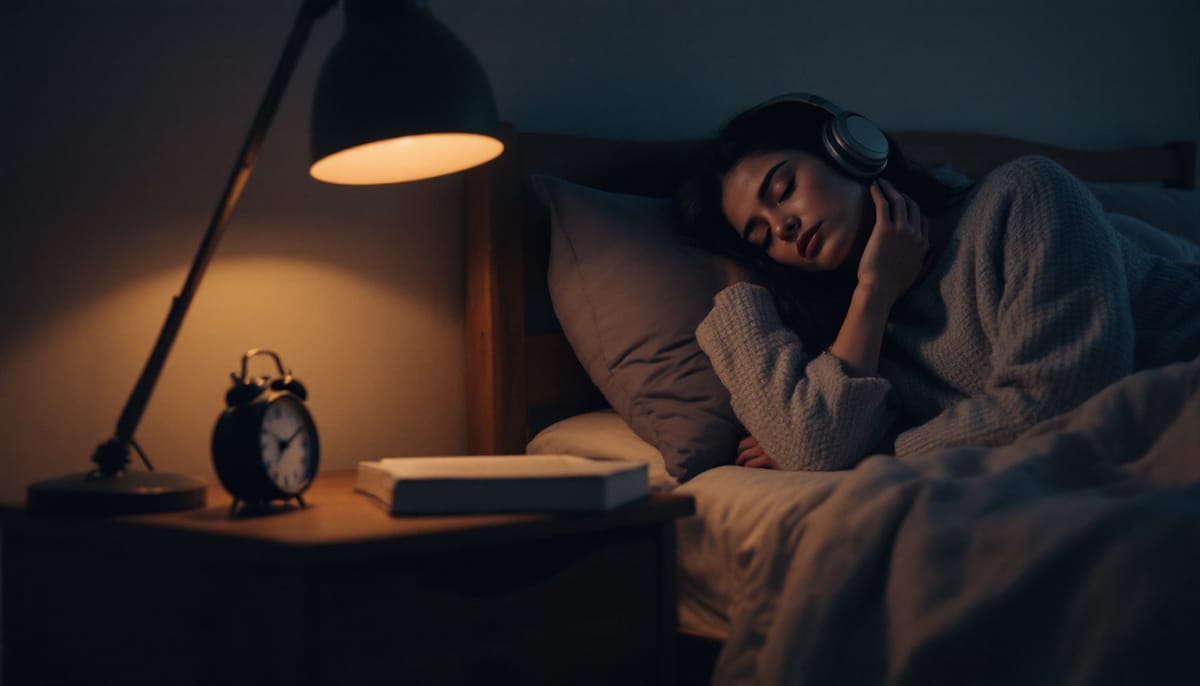
In short — Evening scrolling captures attention through unpredictable content and screen light, delaying drowsiness. Listening demands nothing and creates a calm framework for the transition to night. Replacing scrolling with short, chosen listening sessions offers a gentler, more inhabited evening ritual.
It's 10:47 p.m. You had planned to go to bed early, but your thumb keeps scrolling through the screen. One video, then another. One comment, then an entire thread. The next day, the fatigue is there, and with it that small frustration: "why can't I stop?" This evening scrolling moment has become, for many of us, an involuntary ritual. Not because we love it, but because it fills a void: the one between the active day and the night. Replacing that scroll with chosen listening means giving this pivotal moment another texture — slower, softer, more inhabited.
Why evening scrolling captures our attention so strongly
Scrolling isn't just a habit: it's a mechanism. Platforms are designed to hold attention through an unpredictable succession of content. You never know what's coming next, and this uncertainty fuels the urge to continue. In the evening, when willpower is at its lowest, this mechanism finds ideal ground.
Add to that the light from screens. It delays the feeling of drowsiness by sending the body an artificial daytime signal. The result: we postpone the moment of closing our eyes, not because we aren't tired, but because the brain receives a contradictory message.
Finally, there's the emotional dimension. Scrolling gives the illusion of "unwinding" while it maintains a certain level of stimulation: information, comparisons, notifications. We seek calm, we find agitation. This isn't a character flaw, it's simply an environment poorly suited to slowing down.
What listening changes in the transition to night
Listening, unlike scrolling, demands nothing. No decision, no sorting, no reaction. We close our eyes, we let it come. This active passivity — being present without acting — is precisely what the body needs to slip toward rest.
The voice, the music, the inhabited silence create a framework. They give time a shape, without accelerating it. We can follow a reading, let ourselves be carried by a piece, or simply listen to the breath of a room. This listening has no performance goal: it accompanies.
This is where Sonocrea's approach finds its place. The app offers cultural sound relaxation, rooted in literature, music, and philosophy. It's not about "curing" anything, but about offering a companion for the end of the day: a text read aloud, a chosen piece, a gentle reflection. A way to replace the noise of the world with a voice that slows things down.
Three concrete ways to replace scrolling
1. Create a physical boundary
The simplest gesture is to keep the phone away from the bed. Not to punish it, but to make scrolling less accessible than listening. A charger in another room, a classic watch on the nightstand, headphones placed near the pillow: the environment does much of the work.
- Charge the phone outside the bedroom if possible.
- Prepare headphones or a speaker dedicated to evening listening.
- Choose an end signal: dimmed light, an herbal tea, an open book.
2. Choose listening that doesn't demand attention
Not all audio content is equal. A news podcast or a suspenseful audio series keeps you awake. Conversely, a slow reading, instrumental music, a philosophical essay read in a soft voice invite relaxation. The idea isn't to fall asleep while listening, but to let the body understand that the day is ending.
You can alternate from evening to evening: a poem, a passage from Montaigne, a piece by Satie, a reflection on silence. Variety prevents weariness and keeps the ritual alive.
3. Establish a short and sufficient duration
Twenty to thirty minutes are often enough. Setting a duration — a timer, a playlist that ends — prevents replacing infinite scrolling with infinite listening. The programmed end itself becomes a signal: "this is enough for tonight."
Listening as a cultural practice, not a performance
There's a temptation, when talking about sleep, to turn the ritual into a program: this schedule, this duration, this result. It's often counterproductive. Evening listening benefits from remaining a cultural practice: we listen because it's beautiful, because it's interesting, because it nourishes something in us.
Literature and philosophy have much to say about these moments of transition. Thinking about night, fatigue, rest, isn't a medical subject: it's a human subject, traversed since forever by poets and thinkers. Listening to a text that speaks of the night is remembering that this moment isn't a problem to solve, but an experience to inhabit.
In this perspective, sound relaxation isn't one more tool. It's a way to restore meaning to a moment often endured. We aren't trying to "optimize" our sleep; we're trying to make the evening softer.
A simple ritual to try tonight
Here's a concrete proposal, with no complicated equipment:
- Twenty minutes before bedtime, put the phone out of reach.
- Dim the lights and settle in comfortably.
- Start a short listening session: a reading, music, a philosophical text.
- At the end, stay for a few moments doing nothing, simply breathing.
- Note in one sentence, the next day, what you felt.
Repeated over a few evenings, this ritual becomes familiar. Not because it's magical, but because it's coherent: it sends the body a clear and kind message.
Conclusion: replace, don't remove
It's not about demonizing screens or making anyone feel guilty. Evening scrolling responds to a real need: to unwind, to be distracted, to fill an empty moment. The question isn't to forbid it, but to offer it a gentler alternative. Listening, because it demands nothing and lets time breathe, is a natural candidate.
If you're looking for a starting point, Sonocrea offers listening experiences designed to accompany this moment: readings, music, and selected texts, in a cultural and soothing spirit. You can discover the app and its content at sonocrea.com. Tonight, try just one thing: put down the phone, close your eyes, and listen. The rest will come gently.
Frequently asked questions
How can I stop scrolling on my phone before bed?
Keep your phone away from the bed, charge it outside the bedroom, and prepare headphones or a speaker for evening listening. Choose a short listening session of twenty to thirty minutes with a clear end signal, such as dimmed lights or a timer.
What should I listen to instead of scrolling at night?
Choose content that doesn't demand attention: a slow reading, instrumental music, a philosophical essay read in a soft voice, or a poem. Avoid news podcasts or suspenseful audio series that keep you awake. Variety helps keep the ritual alive.
Is listening better than scrolling for sleep?
Listening demands nothing and lets time breathe, creating a calm framework for the transition to night. Unlike scrolling, it doesn't maintain stimulation through unpredictable content. It accompanies the end of the day without performance goals, making the evening softer.
Read also
Découvrez Sonocrea
Créez vos propres séances de bien-être sonore avec notre IA. Fréquences binaurales, hypnose audio et sons ambiants personnalisés.
Essayer gratuitement →