White, Pink, or Brown Noise: Which Is Best for Sleep?
White, pink and brown noise each mask unwanted sounds differently. Compare their character, discover which profile each suits, and learn how to use them in your bedtime ritual.
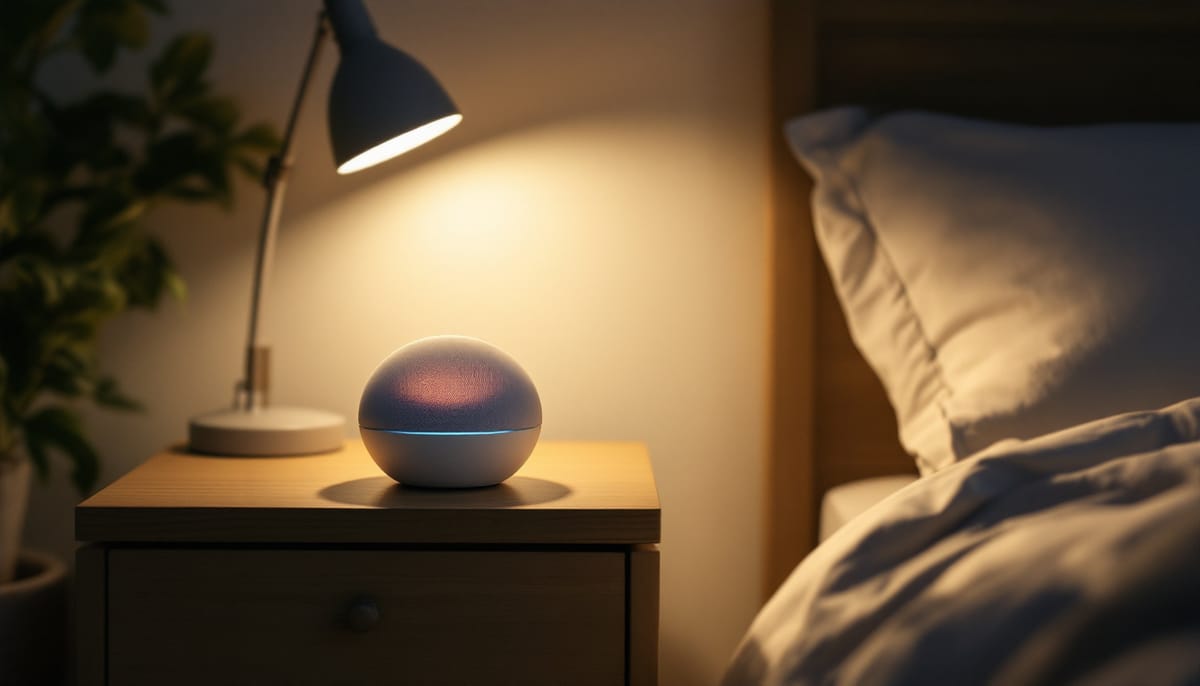
In short — There is no single best noise for sleep: white noise suits noisy environments and sudden sounds, pink noise offers a natural balance, and brown noise provides deep low frequencies for those sensitive to high-pitched sounds. The right choice depends on your sensitivity and surroundings, so experimenting is the best guide.
Do you find it hard to settle into silence? Are you sensitive to surrounding noises that disturb your nights? Colored noises – white, pink, and brown – have become gentle companions for many people seeking calmer sleep. But faced with these different options, how do you know which one truly matches your needs?
In this article, we explore the character of each type of noise, the atmosphere it creates, and practical tips for integrating these soothing sounds into your bedtime ritual.
Understanding colored noises: a matter of frequencies
Before choosing the ideal noise for your nights, it is helpful to understand what distinguishes these sounds. The terms "white," "pink," and "brown" refer to the distribution of sound frequencies, by analogy with the light spectrum.
White noise: the equality of frequencies
White noise contains all audible frequencies at equal intensity. It produces a constant and uniform sound, often compared to the hiss of a television with no signal or the sound of a fan. This characteristic gives it a particular quality: it effectively masks unwanted sounds by creating a homogeneous "sound blanket."
Its main characteristics:
- High-pitched and constant sound, slightly "hissy"
- Excellent ability to mask sudden noises
- Frequencies distributed evenly between 20 Hz and 20,000 Hz
- May seem slightly harsh to some sensitive ears
Pink noise: natural harmony
Pink noise is distinguished by a gradual decrease in intensity at high frequencies. This distribution corresponds more closely to the way our ear naturally perceives sounds, which often makes it more pleasant to listen to for extended periods.
It is frequently found in:
- The sound of steady rain
- Leaves rustling in the wind
- The surf of waves on the beach
- Distant waterfalls
Pink noise offers a remarkable balance between low and high frequencies, creating an enveloping and natural atmosphere.
Brown noise: soothing depth
Also called red noise or Brownian noise (in reference to the Brownian motion of particles), brown noise emphasizes low frequencies even more. It produces a deep, rumbling sound, evoking distant thunder or the muffled roar of the ocean.
Its particularities:
- Deep, low-pitched tone
- Sensation of envelopment and cocooning
- Fewer high components, gentler on the ears
- Ideal for those who find white noise too "shrill"
The effects on sleep: what we know
The use of colored noises to accompany falling asleep relies on several well-identified principles. Understanding these principles will help you make an informed choice.
Sound masking
The first benefit of these noises is their ability to mask disruptive sounds. Whether it is road traffic, noisy neighbors, or a snoring partner, colored noises create a stable sound environment that reduces the impact of acoustic variations on our rest.
Our attention is naturally drawn to sound changes – a sensitivity inherited from our ancestors. By maintaining a constant background sound, we reduce these micro-awakenings that fragment our rest.
The relaxing effect of a steady sound
Listening to constant and predictable sounds can help calm the mind. This sound predictability reassures our attention, which can then relax its vigilance and prepare for sleep.
Low frequencies, particularly present in brown noise, seem to have a particularly soothing effect, perhaps unconsciously evoking sounds perceived in utero.
Creating a ritual
Beyond their acoustic properties, these noises often become an integral part of a falling-asleep ritual. Our mind learns to associate these sounds with sleep, creating a positive conditioning that facilitates the transition to rest.
Practical guide: which noise for your profile?
There is no universal solution – the best noise for sleeping is the one that suits you personally. Here are some guidelines to guide your exploration.
Choose white noise if:
- You live in a particularly noisy environment
- Sudden sounds (horns, doors) disrupt your sleep
- You need powerful sound masking
- You enjoy the sounds of a fan or air conditioning
Opt for pink noise if:
- You are looking for a more natural and organic sound
- White noise seems too high-pitched or harsh to you
- You like the sounds of rain or nature
- You want a compromise between effectiveness and gentleness
Prefer brown noise if:
- You are sensitive to high-pitched sounds
- You are looking for a sensation of deep envelopment
- Distant rumblings soothe you
- You enjoy low, deep frequencies
The Sonocrea app offers a complete palette of these colored noises, allowing you to easily experiment with each option and discover the one that best matches your auditory sensitivity.
Tips for optimal use
To make the most of colored noises in your sleep routine, here are some practical recommendations drawn from the experience of sound relaxation practitioners.
The ideal volume
The sound should be present enough to mask unwanted noises, but never too loud. A volume comparable to a calm conversation is generally recommended. If you have to raise your voice to be heard over the noise, it is too loud.
Listening duration
Several approaches are possible:
- All night: ideal if your environment remains noisy
- With a timer: the sound stops after you fall asleep (30-60 minutes)
- Gradual decrease: the volume slowly decreases over several hours
Experiment to find what works best for you.
Listening equipment
Favor quality speakers over headphones, especially for extended listening. If you use headphones, choose comfortable models designed for sleep. Place the sound source away from your head – on a nightstand or across the room.
Consistency
As with any sleep ritual, consistency reinforces the experience. Use the same type of noise every evening to create a strong association between that sound and bedtime.
Beyond colored noises: exploring other soundscapes
If white, pink, and brown noises are excellent foundations, sound relaxation offers many other possibilities to enrich your experience.
Nature sounds
Rain, ocean, forest, distant storm... These ambiances often naturally combine different "colors" of noise while adding an emotional and evocative dimension. They can be particularly appealing for people who find pure colored noises too "artificial."
Binaural frequencies
These sounds use a slight frequency difference between the left ear and the right ear to create a third frequency perceived by the brain. Some people find them particularly pleasant for inducing a state of deep relaxation.
Personalized combinations
With tools like Sonocrea, you can create your own sound mixes, combining for example a background brown noise with sounds of light rain or soothing sound textures. This personalization allows you to refine your ideal sound environment.
Conclusion: your sleep, your sound
The choice between white, pink, or brown noise is above all a matter of personal preference and experimentation. Each of these sounds has unique qualities that can transform your nights, provided you find the one that resonates with your sensitivity.
Start by testing each type of noise for a few consecutive nights. Be attentive to how easily you fall asleep, the quality of your sleep, and how you feel upon waking. Your body will naturally guide you toward the solution that suits it.
Sound relaxation is a personal journey, and colored noises are only the beginning of the exploration. Soundscapes, soothing frequencies, natural ambiances – a universe of possibilities is available to you to create the ideal conditions for restorative sleep.
Ready to discover your ideal sound for sleeping? Explore the complete library of relaxing sounds on sonocrea.com and begin tonight your journey toward more serene nights.
Sonocrea is a relaxation and comfort tool, not a medical device: it does not replace medical advice or care. Do not listen while driving or during any activity that requires alertness. If you have epilepsy or a psychiatric condition, ask a doctor first.
Frequently asked questions
What is the difference between white, pink and brown noise?
The difference lies in how frequencies are distributed. White noise contains all audible frequencies at equal intensity, pink noise gradually decreases at high frequencies, and brown noise emphasises low frequencies even more, producing a deep, rumbling sound.
Which noise is best if I am sensitive to high-pitched sounds?
Brown noise is often the better fit, as it contains fewer high components and is gentler on the ears. It produces a deep, low-pitched tone with a sensation of envelopment, which suits those who find white noise too shrill.
How loud should coloured noise be for sleep?
The sound should be loud enough to mask unwanted noises but never too loud. A volume comparable to a calm conversation is generally recommended. If you have to raise your voice to be heard over the noise, it is too loud.
Read also
Découvrez Sonocrea
Créez vos propres séances de bien-être sonore avec notre IA. Fréquences binaurales, hypnose audio et sons ambiants personnalisés.
Essayer gratuitement →