The Sound of the Ocean: Story of a Relaxation Classic
Explore the history and appeal of the sound of the ocean, from ancient texts to modern relaxation apps, and learn how to listen to it with discernment.
In short — The sound of the ocean is a relaxation classic because its broadband noise and quasi-regular rhythm create a comforting sonic bubble. Its history spans literature, music, and wellness practices, and it remains a universal, easy-to-recognise sound that promotes calm.
The Sound of the Ocean, a Sonic Proustian Madeleine
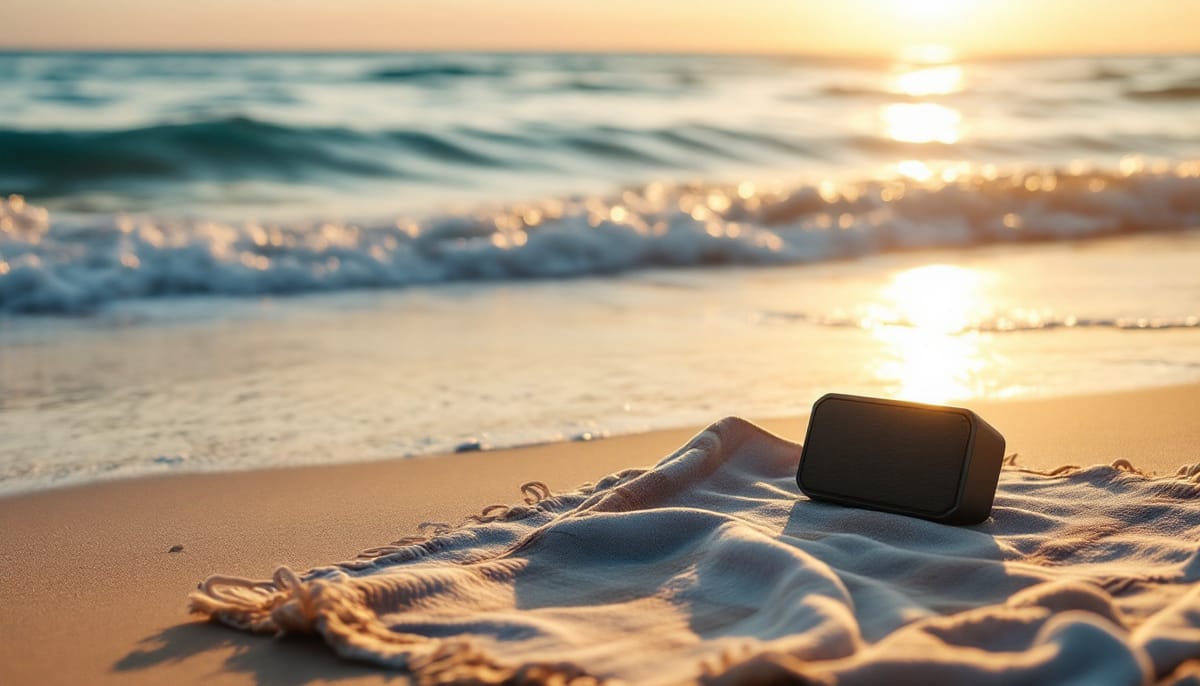
Close your eyes. You are on a beach, at the water's edge. The waves arrive, retreat, return. This steady back-and-forth soothes you. Why has the sound of the ocean become, over the decades, one of the great classics of relaxation? Its history intersects with literature, music, philosophy, and contemporary wellness practices.
In this article, we explore the origins of this iconic sound, what it evokes in our collective imagination, how artists have integrated it into their works, and how to listen to it today with discernment.
Origins: The Sea as Humanity's Sonic Landscape
The sound of waves has accompanied humanity since the beginning. The first maritime civilizations, from the Mediterranean to the Atlantic coasts, lived to the rhythm of the tides. In ancient texts, the sea is both threat and cradle: Homer already describes the "endless sound of the sea" in The Odyssey, where the waves carry Ulysses from island to island.
In the 19th century, with the development of seaside resorts and sea bathing, the ocean became a place of leisure. Romantic writers, from Chateaubriand to Victor Hugo, celebrated its sounds. In Toilers of the Sea, Hugo gives the sea an almost human voice, made of rumblings and murmurs. This literary listening to the open sea prepared the modern enthusiasm for wave recordings.
The sound of the ocean is therefore not a recent invention: it is a sonic landscape that has nourished the collective imagination long before entering our living rooms.
Why This Sound Soothes: Simple and Regular Listening
The sound of waves has acoustic characteristics that make it particularly comfortable to the ear. It is a broadband noise, often compared to white noise or pink noise: a mix of frequencies covering a large part of the audible spectrum. This type of sound partially masks surrounding noises — distant conversations, traffic, household appliances — and creates a stable sonic bubble.
Moreover, the rhythm of the waves is regular but not mechanical. Unlike a metronome, it varies slightly: each wave is unique. This quasi-regularity gently captures attention without fixing it, which encourages a form of letting go. One might speak of a "floating attention": the mind lets itself be carried by the sound without effort.
This is not about promising a therapeutic effect, but about recognizing a fact of experience: many people find this sound pleasant and conducive to calm. It is sonic comfort, an aid to relaxation, nothing more — and that is already a lot.
The Sound of the Ocean in Art: Music, Cinema, Literature
Artists seized upon the sound of the sea long before the streaming era. In classical music, composers such as Claude Debussy, with La Mer, or Benjamin Britten, with Peter Grimes, sought to translate the ocean into notes. So-called "program music" of the 19th century abounds in storms and ripples.
In the 20th century, sound recording changed the game. Recordists captured waves on the coasts, and these tapes were used in cinema, radio, and then in the first relaxation records. The sound of the ocean became a cultural object in its own right, reproduced and broadcast on a large scale.
Literature is no exception. In The Old Man and the Sea, Hemingway makes the ocean a sonic character: you hear the lapping against the hull, the rustling of the lines, the silence between two waves. Among poets, the sea is often associated with breath, with respiration — a parallel found in contemporary relaxation practices.
Finally, the philosophy of listening, from Gaston Bachelard to Peter Szendy, reminds us that paying attention to ordinary sounds is a way of inhabiting the world. Listening to the ocean is also listening to time passing.
From the Seaside to Headphones: How the Sound of the Ocean Became a Classic
The modern history of the sound of the ocean as a relaxation tool begins in the 1960s and 1970s. Specialized labels released "nature sounds" records: waves, rain, forest. These recordings were first sold in stores, then broadcast on radio, in airplane cabins, waiting rooms, and hotel rooms.
With the arrival of the CD, then MP3 and streaming platforms, access to these atmospheres became immediate. Meditation and sound relaxation apps integrated them into their libraries. The sound of the ocean almost always ranks at the top of the most-listened categories, alongside rain and crackling fire.
Why such success? Because it is universal and easy to recognize. No explanation needed: everyone knows what a wave sounds like. This immediacy makes it an ideal entry point for discovering sound relaxation.
Apps like Sonocrea offer crafted oceanic atmospheres, carefully recorded, and pair them with cultural content: readings, reflections, music. The goal is not to promise a result, but to offer a pleasant sonic setting for resting, reading, or working.
How to Listen to the Sound of the Ocean with Precision
Listening to the sound of the ocean is simple, but a few guidelines can enrich the experience:
- Choose a quality source: favor recordings without artifacts, without loops so short they create a perceptible repetition.
- Set the volume moderately: the sound should remain a background, not cover your thoughts or conversations.
- Vary the atmospheres: slow waves for reading, a more present surf to mask a noisy environment.
- Pair with an activity: calm breathing, gentle stretching, writing, or simply a pause with eyes closed.
- Avoid prolonged listening at high volume: as with any sound, auditory comfort comes first.
These tips are a matter of common sense and self-respect. There is nothing medical about them: they simply aim to make listening more pleasant and sustainable.
A Cultural Listening, Not a Promise
The sound of the ocean does not need the supernatural to charm. Its history is that of a shared sonic landscape, shaped by sailors, poets, composers, and sound engineers. Listening to it today means reconnecting with a simple experience: that of a rhythm that comes and goes, like breathing.
At Sonocrea, we believe in a cultural sound relaxation, rooted in literature, music, and philosophy. The sound of the ocean holds a place of honor there, like a classic rediscovered with each listen.
Ready to let yourself be carried by the surf? Discover our oceanic atmospheres and our content at https://sonocrea.com.
Sonocrea is a relaxation and comfort tool, not a medical device: it does not replace medical advice or care. Do not listen while driving or during any activity that requires alertness. If you have epilepsy or a psychiatric condition, ask a doctor first.
Frequently asked questions
Why does the sound of the ocean help relaxation?
The sound of waves is a broadband noise that masks surrounding sounds and creates a stable sonic bubble. Its rhythm is regular but not mechanical, which gently captures attention and encourages letting go.
How can I listen to ocean sounds effectively?
Choose high-quality recordings without short loops, set a moderate volume, and pair listening with a calm activity like breathing or reading. Vary the atmospheres and avoid prolonged loud listening.
When did ocean sounds become popular for relaxation?
The modern use of ocean sounds for relaxation began in the 1960s and 1970s with nature sounds records. With CDs, MP3s, and streaming, these atmospheres became easily accessible and are now a staple in relaxation apps.
Read also
Découvrez Sonocrea
Créez vos propres séances de bien-être sonore avec notre IA. Fréquences binaurales, hypnose audio et sons ambiants personnalisés.
Essayer gratuitement →