Create Your Sound Relaxation Space at Home: Complete Guide
A step-by-step guide to setting up a personal sound sanctuary at home, from choosing a quiet corner and the right audio equipment to building a calming atmosphere and a regular routine.
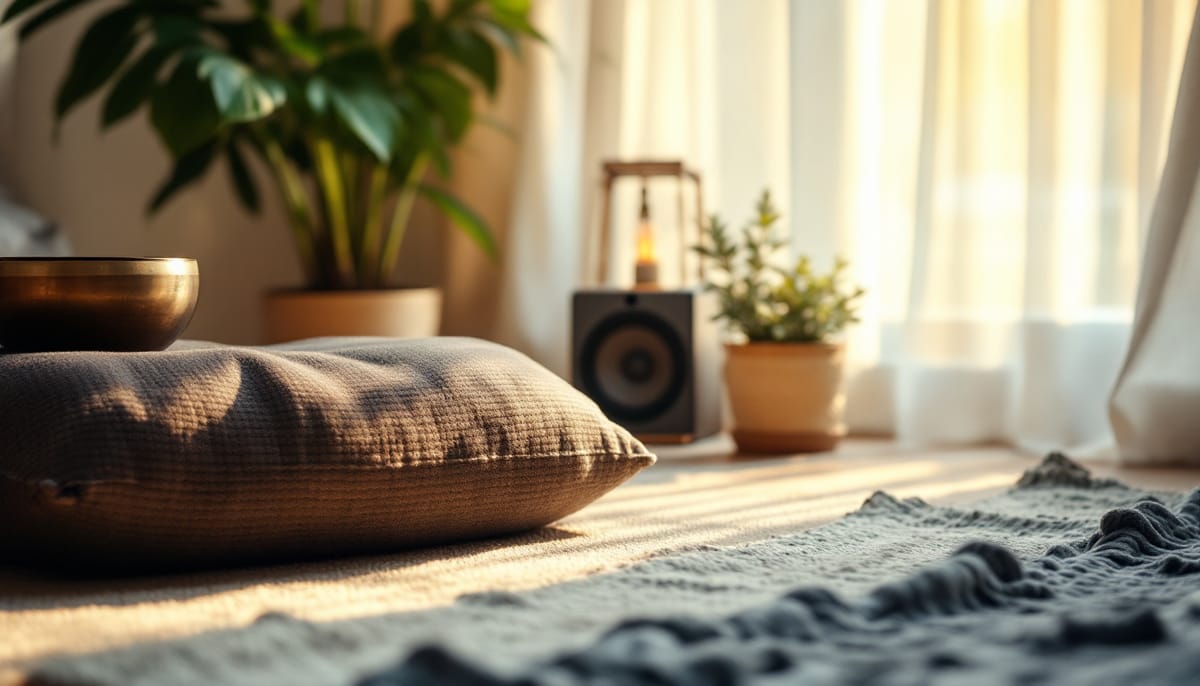
In short — Creating a sound relaxation space at home needs only two to three square metres and a few thoughtful elements. Choose a quiet spot, add comfortable seating and decent audio equipment, keep the decor soft and minimal, then practise regularly in short sessions.
In our daily lives, often paced by stress and constant demands, having a personal sound sanctuary becomes a true luxury accessible to everyone. Sound relaxation, an ancestral practice brought back into fashion, offers a moment of calm where vibrations and harmonious frequencies accompany our return to inner balance.
Creating a space dedicated to this practice at home requires neither a large budget nor a large area. Above all, it is about designing an environment conducive to deep listening, where every element contributes to your well-being. This guide walks you step by step through setting up your personal sound sanctuary.
Why dedicate a space to sound relaxation?
Sound relaxation stands out from other forms of meditation through its unique sensory approach. It uses sound vibrations as an anchor point for the mind, thereby making it easier to enter a state of deep relaxation. Unlike silent meditation, which can be difficult for beginners, sound accompaniment offers natural support for concentration.
Having a dedicated space offers several significant advantages:
- Positive conditioning: your brain gradually associates this place with relaxation, making it easier to enter a relaxed state
- Consistency of practice: a ready-to-use space encourages a daily routine
- Optimized listening quality: suitable acoustics reveal all the subtleties of soothing sounds
- A break from daily life: crossing the threshold of this space symbolically marks a transition toward calm
Research confirms that the environment considerably influences our ability to reach states of relaxation. A space thoughtfully designed and arranged with intention multiplies the benefits of each session.
Choosing and preparing the ideal location
Choosing the location is the first crucial step in your project. Several criteria guide this decision to ensure optimal practice conditions.
Natural sound insulation
Choose a room or corner away from sources of noise: busy street, household appliances, family living areas. A guest bedroom, a little-used office, or even a large converted closet can work perfectly. If insulation remains imperfect, simple solutions exist: thick curtains, soft rugs, and filled bookshelves effectively absorb unwanted noise.
Controlled lighting
Light profoundly influences our inner state. Opt for a space where you can control the light intensity according to your needs: soft natural light for morning sessions, partial darkness for evening practices. Light sheer curtains and safe LED candles allow you to adjust the ambiance at will.
Temperature and ventilation
A relaxed body cools slightly. Plan for a comfortable temperature around 20-22°C and keep a light blanket within reach. Also ensure good air circulation to avoid any feeling of being closed in, which would hinder your relaxation.
The minimum space needed
Contrary to popular belief, a large space is not essential. Two to three square meters are enough to set up a meditation cushion and a few accessories. What matters most is the feeling of having a preserved territory, even a modest one, entirely devoted to your well-being.
Essential equipment for an optimal sound experience
Setting up your sound relaxation space relies on a thoughtful selection of elements that promote physical comfort and listening quality.
Comfort for sitting and lying down
Your body must be able to relax completely without discomfort. Several options are available to you:
- Zafu and zabuton: the traditional round cushion placed on a flat mat is perfect for seated meditations
- Thick yoga mat: ideal for lying-down practices, it protects against cold floors
- Meditation chair: for those who prefer back support, specific models exist
- Relaxation blanket: light yet enveloping, it provides security and warmth
The right audio system
Sound quality directly determines the effectiveness of your sessions. For faithful reproduction of frequencies, especially the deep lows of Tibetan bowls or the subtle harmonics of gongs, invest in proper audio equipment. A mid-quality Bluetooth speaker is enough to start, but audiophiles will appreciate hi-fi speakers or noise-canceling headphones.
The Sonocrea app is an excellent starting point for exploring different relaxation soundscapes. Its varied library lets you experiment and discover the sounds that resonate best with your personal sensitivity.
Acoustic instruments
To enrich your practice, certain instruments accessible to beginners add an incomparable immersive dimension:
- Singing bowl: Tibetan in metal or crystal, it produces enveloping vibrations
- Koshi chimes: their delicate chimes evoke natural elements
- Tuning forks: their pure frequencies facilitate harmonization
- Ocean drum: its beads reproduce the soothing sound of waves
Complementary sensory elements
Although sound remains central, other senses can be delicately engaged to deepen the experience: an essential oil diffuser with notes of lavender or cedar, purifying green plants, personal symbolic objects. However, be careful not to overload the space so as to preserve its uncluttered and restful character.
Creating an atmosphere conducive to deep relaxation
Beyond equipment, the overall atmosphere of your space subtly influences your ability to let go. Every detail matters in building a harmonious sensory cocoon.
A soothing color palette
For a meditation space, favor natural and soft tones: off-white, beige, pearl gray, pastel blue, or sage green. Avoid bright colors or strong contrasts that stimulate rather than soothe. Natural materials such as linen, cotton, or raw wood reinforce this impression of serenity.
Minimalist organization
A cluttered space unconsciously generates stress. Adopt a minimalist and intentional approach: every object present should have a particular function or meaning. Store unused accessories in baskets or closed boxes. This visual simplicity facilitates mental calm.
Rituals for entering the space
Establish symbolic gestures that mark the transition into your practice: removing your shoes at the entrance, lighting a candle, sounding a small chime. These simple rituals signal to your brain the shift from active mode to receptive mode.
Technical preparation
Before each session, make sure your phone is in airplane mode, your batteries are charged, and your playlist or app is ready. These precautions prevent interruptions that would break your meditative state.
Establishing a sustainable practice routine
A beautiful space is not enough: it is regular use that truly transforms your relationship with sound well-being. Here is how to anchor this practice in your daily life.
Define realistic time slots
Start modestly with 10- to 15-minute sessions, three times a week. Morning upon waking or evening before bed are favorable times. Put these appointments in your calendar as non-negotiable commitments to yourself.
Vary the sound experiences
To maintain your interest and explore different facets of sound relaxation, alternate types of content: Tibetan bowl sound baths, nature sounds, binaural frequencies, meditative music. An app like Sonocrea makes this exploration easier by offering a diversity of soundscapes suited to different moments and intentions.
Keep a practice journal
Briefly note after each session your sensations and observations: sleep quality, perceived stress level, particularly appreciated sounds. This journal becomes a valuable tool for self-knowledge and motivation.
Welcome variations
Some days, relaxation will come easily; other times, the mind will remain restless. Accept these fluctuations without judgment. The regularity of practice matters more than the perfection of each session.
Conclusion: your sound sanctuary awaits
Creating a sound relaxation space at home represents a valuable investment in your balance. No considerable means are needed: a clear intention, a few thoughtful arrangements, and regular practice are enough to transform a simple corner of your home into a true refuge of serenity.
The benefits appear gradually: improved sleep, easier stress management, more accessible moments of inner calm. Your space will become that restorative place where you can reconnect, whatever the turmoil of the outside world.
Start today by identifying the potential location and gathering a few basic elements. Every small step counts in this well-being journey.
Ready to explore the world of sound relaxation? Discover a complete collection of soothing sounds and immersive soundscapes at sonocrea.com and give your new relaxation space the soundtrack it deserves.
Sonocrea is a relaxation and comfort tool, not a medical device: it does not replace medical advice or care. Do not listen while driving or during any activity that requires alertness. If you have epilepsy or a psychiatric condition, ask a doctor first.
Frequently asked questions
How much space do I need for a sound relaxation corner at home?
Two to three square metres are enough to set up a meditation cushion and a few accessories. What matters most is the feeling of having a preserved territory, even a modest one, entirely devoted to your well-being.
What audio equipment do I need for sound relaxation at home?
A mid-quality Bluetooth speaker is enough to start, while hi-fi speakers or noise-cancelling headphones suit those who want more detail. The Sonocrea app offers a varied library for exploring different relaxation soundscapes.
How do I build a regular sound relaxation routine?
Start modestly with 10- to 15-minute sessions, three times a week, in the morning or before bed. Put these appointments in your calendar as non-negotiable commitments to yourself and vary the sound experiences to maintain interest.
Read also
Découvrez Sonocrea
Créez vos propres séances de bien-être sonore avec notre IA. Fréquences binaurales, hypnose audio et sons ambiants personnalisés.
Essayer gratuitement →