Debussy, Ravel and Impressionist Music for Relaxation
Explore how Debussy and Ravel's impressionist music can create a calm listening space. Discover key works and practical tips for a cultural sound relaxation ritual.
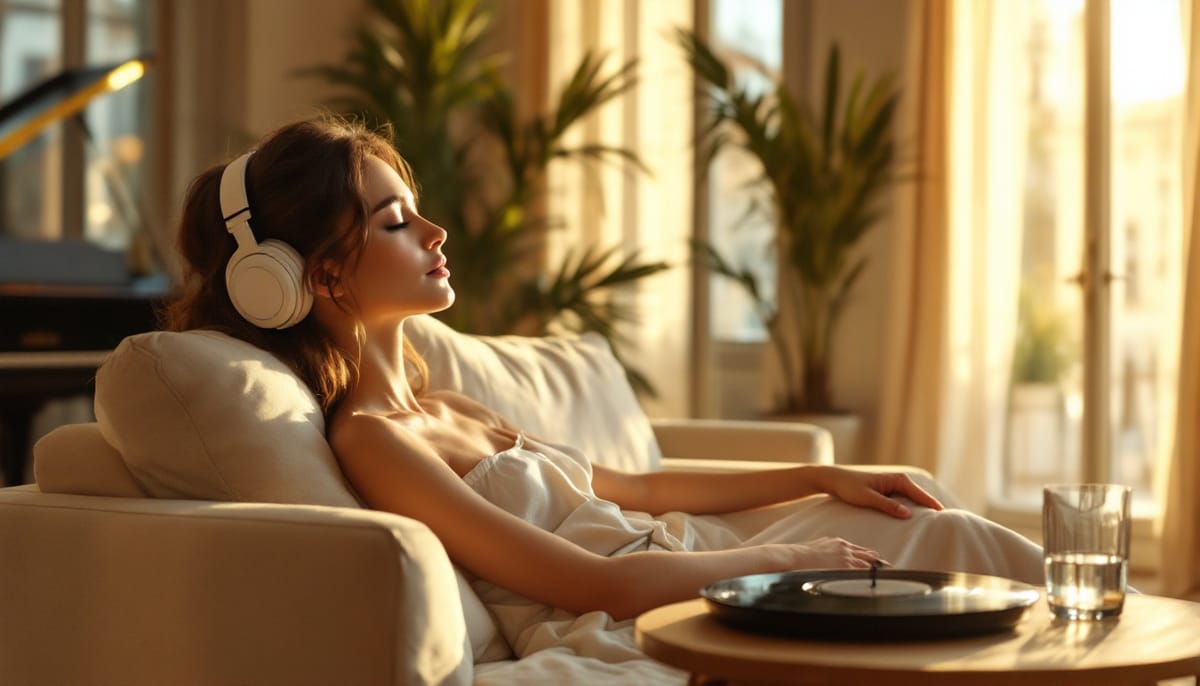
In short — Impressionist music by Debussy and Ravel encourages calm listening through moderate tempos, gentle dynamics, and rich timbres. Works like Clair de lune and Pavane pour une infante défunte offer a climate of suggestion rather than narrative tension, making them ideal for cultural sound relaxation.
There are pieces of music that do not seek to captivate us, but to set us down gently. Those of Claude Debussy and Maurice Ravel belong to this rare family: works that open up space rather than filling it. In a practice of cultural sound relaxation, musical impressionism holds a place of choice, not for its supposed virtues, but for what it offers to the listener: a gentle attention, a colour, a breath. This article explores how this music can accompany a moment of relaxation, with the rigour and delicacy that a true listening experience requires.
What exactly is impressionist music?
The term "impressionism" comes from painting, and it must be handled with care in music. Debussy himself was not fond of the label. Yet a cluster of shared traits brings together works from the late nineteenth and early twentieth centuries: a taste for suggestion rather than description, harmonies that take on colour without resolving abruptly, supple rhythms, timbres worked like materials.
In Debussy, the whole-tone scale, parallel chords, and the use of the piano as an instrument of multiple resonances create a floating atmosphere. In Ravel, goldsmith-like precision does not prevent an immediate sensuousness of sound: Pavane pour une infante défunte, Ma mère l'Oye or Daphnis et Chloé play on clear, luminous textures.
For today's listener, this music offers a considerable advantage: it does not tell a breathless story. It offers a climate. One can enter it without knowing anything about music theory, and that is precisely what makes it an excellent companion for relaxation.
Why this music encourages calm listening
Sound relaxation does not consist in passively enduring a sound, but in giving it particular attention. Musical impressionism lends itself to this exercise for several concrete reasons.
- Often moderate tempos: many pieces move at a pace close to that of a slow walk or a full breath, which leaves time to follow each note.
- Gentle dynamics: the nuances rarely tend toward constant brilliance. The piano is often played in a middle register, with resonances that fade naturally.
- An absence of strong narrative tension: no great dramatic climax to expect, and therefore no tense vigilance. The ear can come to rest.
- Rich timbres: strings, harp, flute, celesta, prepared piano… the variety of colours sustains interest without tiring.
The point here is not to promise any particular effect, but to note something simple: some music invites a slowing of attention more easily than others. Impressionism belongs to this category, provided one chooses the performance and the volume well.
Three doorways to begin
1. Debussy, Clair de lune and the Préludes
Clair de lune, from the Suite bergamasque, is undoubtedly the best-known piece. Its suspended melody and light arpeggios make it an obvious starting point. One can then explore the Préludes, notably "Des pas sur la neige" or "La fille aux cheveux de lin", whose very titles suggest a calm image.
2. Ravel, Pavane pour une infante défunte
Written for piano and then orchestrated, this slow pavane possesses a tranquil nobility. The orchestration adds woodwinds and strings that envelop without ever pressing. A piano-only version will suit a more intimate listening, through headphones, in a quiet room.
3. Pieces for children and suites
Ma mère l'Oye by Ravel, Children's Corner by Debussy: these short, tender pages, often marked by a crafted simplicity, are ideal for a twenty- to thirty-minute relaxation session. Their brevity allows listening without the effort of prolonged concentration.
How to integrate these works into a relaxation ritual
Music alone does not do everything: the setting matters as much as the programme. Here is a concrete way to organise a calm listening session, in the spirit of cultural sound relaxation.
- Choose a moment when you will not be interrupted, at the end of the day for example, with no screen nearby.
- Prepare the space: soft light, a comfortable seat, perhaps a blanket. Nothing spectacular, just comfort.
- Set the volume low, loud enough to hear the details, low enough not to be overwhelmed.
- Listen to a whole work rather than excerpts: continuity contributes to calm.
- Let thoughts come without chasing them away, then return to the sound, as one returns to one's breathing.
Some prefer a voice that guides attention before the music. This is the principle behind the original scripts offered by Sonocrea: texts inspired by the wisdom traditions of the world, written to accompany listening without ever commenting on it word for word. One can thus alternate a short spoken introduction, then a piece by Debussy or Ravel, then silence.
Listening differently: a matter of culture and attention
Cultural sound relaxation stands apart from a simple background playlist through a deliberate choice: to consider listening as a practice, almost a form of reading. To listen to Ondine or Reflets dans l'eau is to accept following a musical thought, its hesitations, its suspensions. This tranquil attention, with no goal of performance, is already a form of well-being.
Musical impressionism also reminds us that relaxation is not necessarily total silence. It can be a soft, colourful sonic material that occupies the mind just enough for it to stop stirring. Debussy's piano, Ravel's harp, the muted strings of their orchestras offer this material with an elegance that never goes out of fashion.
To extend the experience, the Sonocrea app offers sound relaxation sessions where classical music sits alongside texts inspired by different traditions, in a sober setting and without excessive promises. It is a simple way to establish a regular listening ritual, at home, at your own pace.
Conclusion: an invitation to slow down
Debussy and Ravel did not write to put us to sleep, but to make us hear differently. Their music, made of nuances and suggestions, lends itself naturally to calm listening, provided one gives it time and a setting. A dimly lit room, an armchair, a discreet volume, and Clair de lune or a Pavane are enough to transform the end of a day.
If you would like to discover cultural sound relaxation sessions, conceived as invitations to listen rather than as recipes, visit https://sonocrea.com. There you will find original scripts and musical worlds to explore at your leisure.
Caution: do not listen while driving; in case of epilepsy or psychiatric disorders, seek medical advice.
Frequently asked questions
What is impressionist music?
Impressionist music is a term borrowed from painting, though Debussy disliked it. It refers to late 19th- and early 20th-century works that favour suggestion over description, with colourful harmonies, supple rhythms, and rich timbres, as heard in Debussy and Ravel.
Why is Debussy's music good for relaxation?
Debussy's music often has moderate tempos, gentle dynamics, and an absence of strong narrative tension. Its rich timbres and floating harmonies invite a slowing of attention, making it a suitable companion for calm listening and relaxation.
How can I integrate Debussy and Ravel into a relaxation ritual?
Choose an uninterrupted moment, prepare a comfortable space with soft light, set a low volume, and listen to a whole work rather than excerpts. You can alternate a short spoken introduction, a piece by Debussy or Ravel, and then silence.
Read also
Découvrez Sonocrea
Créez vos propres séances de bien-être sonore avec notre IA. Fréquences binaurales, hypnose audio et sons ambiants personnalisés.
Essayer gratuitement →