The Mbira of Zimbabwe: The Gentle Charm of a Thumb Piano
The mbira, Zimbabwe's iconic thumb piano, produces soft, repetitive tones that invite calm. Explore its history, craftsmanship, cultural role and relaxing sounds.
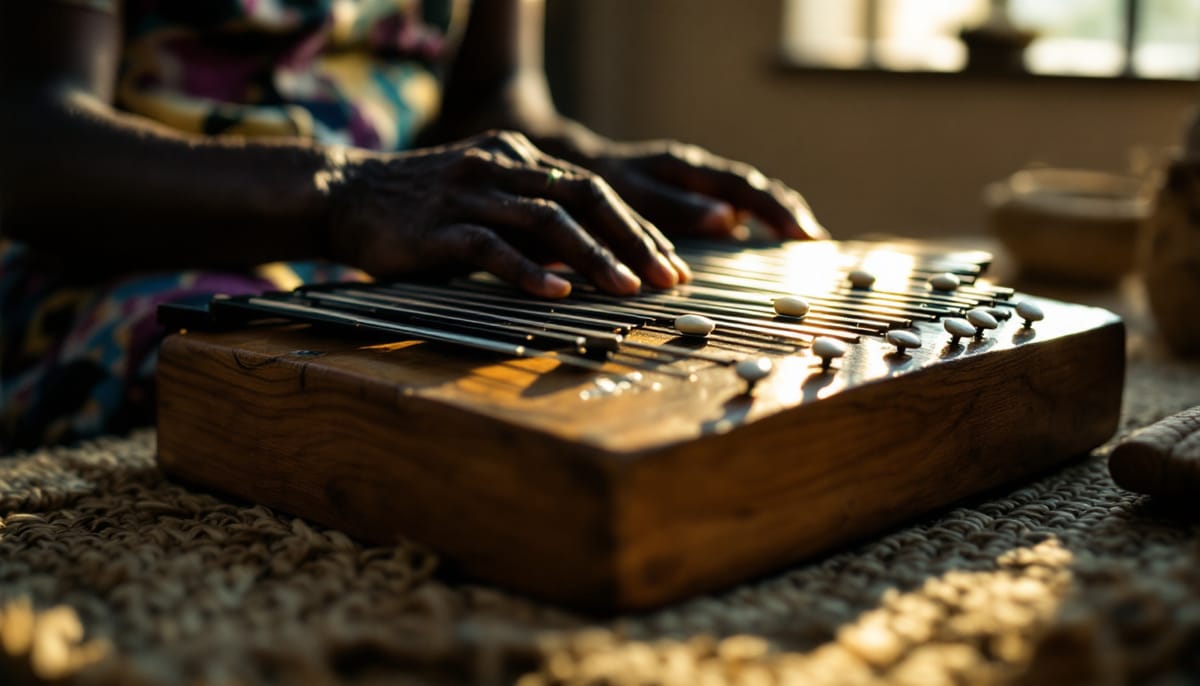
In short — The mbira is a Zimbabwean lamellophone with metal tines plucked by the thumbs, producing soft, cyclical melodies. It holds deep cultural significance for the Shona people and is valued today for its calming, meditative quality.
The mbira, often called the "thumb piano," is an iconic instrument of Zimbabwe. Its metal tines, plucked with the thumbs, produce soft, repetitive tones that invite relaxation. Far from being a mere musical object, it carries a rich history and a deep social function. In this article, we explore its origins, its craftsmanship, its place in Zimbabwean culture, and its benefits for well-being, with all due restraint.
What is the mbira?
The mbira is a lamellophone instrument belonging to the idiophone family. It consists of a wooden resonator box, often decorated, to which some twenty metal tines are attached. The musician plucks these tines with the thumbs and sometimes the index finger, creating cyclical melodies. It is found in various forms across several regions of Africa, but it is in Zimbabwe that the mbira dzavadzimu (literally "mbira of the spirits") is most famous.
This instrument is often accompanied by rattles (hosho) and singing. Its music, characterized by repetitive patterns and subtle variations, encourages a state of light concentration, close to meditation.
History and cultural significance
The mbira has been played for centuries in Zimbabwe, notably by the Shona people. It holds a central place in traditional ceremonies, where it accompanies songs and dances. According to tradition, its music is said to communicate with the ancestors and maintain harmony within the community. However, the aim here is not to perpetuate rituals, but to recognize the cultural and artistic value of this instrument.
In the 1970s, the mbira became a symbol of cultural resistance during Zimbabwe's struggle for independence. Musicians such as Thomas Mapfumo integrated its sounds into modern styles, helping to spread it internationally. Today, women and men artists carry on this tradition, such as the singer and mbira player Hope Masike, who blends jazz with traditional music.
The mbira has also inspired musicians outside Africa, drawn in by its gentleness and rhythmic complexity. It is taught in music schools and is the subject of dedicated festivals, such as the Zimbabwe Music Festival.
Craftsmanship and playing: an art of patience
Making a mbira is meticulous artisanal work. The wood used, often mubvamaropa (a local tree), is selected for its tone. The metal tines, once forged from nails or springs, are now custom-made. Their length and thickness determine the pitch. The resonator box may include shells or metal capsules that add a slight buzzing, characteristic of the instrument's timbre.
Playing the mbira requires great dexterity. The thumbs alternate melodic and rhythmic patterns, while the other fingers support the instrument. The music is often polyphonic, with several voices layered on top of one another. This apparent complexity contrasts with the simplicity of the gestures, making it an instrument accessible to beginners and fascinating for experts.
Women and men luthiers carry on this craft, such as the Zimbabwean Albert Chimedza, founder of the Mbira Centre in Harare, who trains new artisans and musicians.
The mbira and well-being: an invitation to relax
Listening to the mbira brings a feeling of calm. Its repetitive melodies and warm timbres create a sound environment conducive to relaxation. Without claiming any medical effects, it can be noted that this music encourages concentration, conscious breathing, and grounding in the present moment. It is often used during meditation or yoga sessions, thanks to its enveloping character.
As part of a cultural sound-relaxation approach, the mbira offers an alternative to purely electronic music. It invites you to slow down the pace, listen to the nuances, and savor the richness of the timbres. Apps such as Sonocrea offer recordings of mbira and other instruments from around the world, for personalized moments of relaxation.
To fully enjoy the mbira, it is advisable to listen in a quiet place, with headphones or quality speakers. You can also accompany the listening with deep breaths or a short guided meditation. The important thing is to let yourself be carried by the musical cycles, without trying to analyze them.
The mbira in the global musical landscape
The mbira has influenced many musical genres, from jazz to world music. Artists such as the Zimbabwean group Mbira Renaissance or the South African singer Thandiswa Mazwai have integrated it into their world. In Europe and North America, musicians use it for its textural qualities, such as the Swiss percussionist Lucas Niggli.
The mbira is also a bridge between cultures. It reminds us that relaxation can be rooted in a tradition, without drifting into esotericism. Its history teaches us patience, listening, and respect for ancestral craftsmanship.
Conclusion
The mbira of Zimbabwe is much more than an instrument: it is an invitation to gentleness, contemplation, and sharing. Whether you are a musician, a music lover, or simply seeking calm, let yourself be charmed by its unique sounds. To discover recordings of mbira and other soothing music from around the world, explore the Sonocrea app at sonocrea.com. Treat yourself to a moment of cultural sound relaxation, in all simplicity.
Caution: do not listen while driving; in case of epilepsy or psychiatric disorders, seek medical advice.
Frequently asked questions
What is the mbira instrument?
The mbira is a lamellophone from Zimbabwe with a wooden resonator box and around twenty metal tines plucked with the thumbs. Its repetitive melodies and warm timbres create a calm, meditative listening experience.
What is the cultural significance of the mbira in Zimbabwe?
Played for centuries, notably by the Shona people, the mbira accompanies ceremonies, songs and dances. In the 1970s it became a symbol of cultural resistance, and artists such as Thomas Mapfumo and Hope Masike helped spread it internationally.
Can the mbira help with relaxation?
Listening to the mbira can bring a feeling of calm. Its repetitive melodies and warm timbres encourage concentration, conscious breathing and grounding in the present moment, making it a soothing companion for meditation or quiet listening.
Read also
Découvrez Sonocrea
Créez vos propres séances de bien-être sonore avec notre IA. Fréquences binaurales, hypnose audio et sons ambiants personnalisés.
Essayer gratuitement →