Forest Walking: Listening to Natural Sounds
Forest walking combines gentle movement with attentive listening to natural sounds. Here is how to turn it into a simple relaxation ritual, and how to extend it at home.
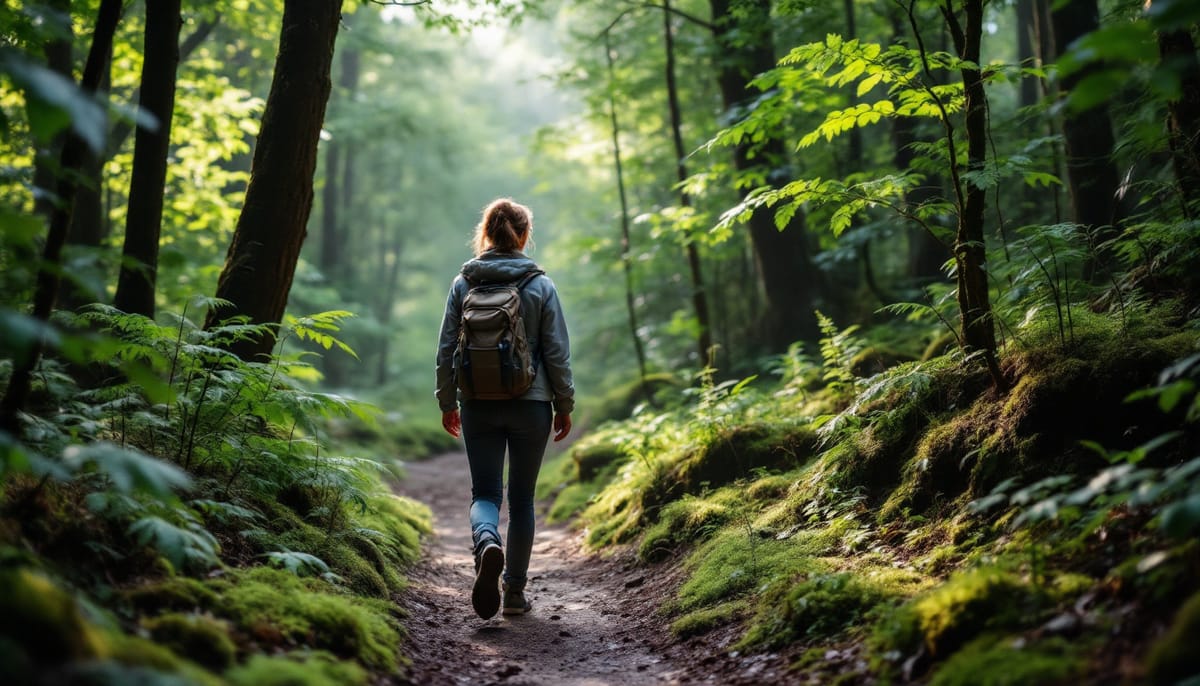
In short — Forest walking pairs gentle movement with attentive listening to natural sounds such as wind, water, birds and footsteps. Slowing down and opening the ear in stages helps the mind settle. The experience can be extended at home with nature-inspired sound ambiences.
What if the best relaxation studio were found under the trees? Forest walking, practiced with attention, offers a complete sensory experience: the body moves forward, the breath settles in, and the ear begins to pick up a sound world of unsuspected richness. Far from screens and urban noise, this simple practice connects movement to listening. It promises nothing more than a moment of relaxation, but it does so with remarkable generosity. In this article, we explore how forest walking and listening to natural sounds can become a wellness ritual accessible to everyone, and how tools like the Sonocrea app extend this experience at home.
Why the forest transforms our listening
In the city, the soundscape is saturated: engines, air conditioners, notifications, conversations. The ear, constantly solicited, ends up operating in defensive mode. In the forest, the situation changes. Sounds there are softer, more spaced out, more varied. The wind in the leaves, the creak of a branch, the distant song of a bird: each sound event has its place, without aggression.
This quality of listening is not just an impression. It rests on a difference in sound density and regularity. The forest environment produces what acousticians call a "biophonic" soundscape, dominated by living sources: birds, insects, foliage. This particular texture invites attention to settle, then to relax. We no longer listen to protect ourselves, but for pleasure.
Walking adds an essential dimension: rhythm. By moving forward at a steady pace, we naturally synchronize breathing and stride. The body finds a cadence, the mind follows. It is this combination — gentle movement and a soothing sound environment — that makes forest walking such an appreciated interlude of relaxation.
The sounds of the forest: a living score
Listening to the forest means discovering a composition in motion. Unlike recorded music, the forest soundscape never repeats exactly. It evolves with the hour, the season, the weather. Here are a few families of sounds that one can learn to recognize:
- Airborne sounds: wind in the treetops, rustling leaves, whistling in the branches. They set the general tempo.
- Water sounds: streams, drops after rain, lightly touched puddles. Their regularity is particularly enveloping.
- Animal sounds: bird songs, insect buzzing, discreet movements in dead leaves.
- Footstep sounds: cracking twigs, brushing against moss, resonances of the ground. They remind us that we are part of the landscape.
This variety creates an experience of active listening. One can have fun identifying the sources, noticing the silences between sounds, following a bird's song as it moves away. This gentle attention, without effort, occupies the mind without tiring it. This is one of the great interests of forest walking: it offers a pleasant object of attention, which leaves less room for rumination.
Listening without analyzing
There are two ways to listen to the forest. The first is analytical: naming the birds, distinguishing tree species, understanding the origin of each noise. The second is more contemplative: welcoming sounds as they come, without sorting them. Both are valid. For relaxation, the second is often more restful. We let the soundscape pass through us, as we listen to a piece of music without trying to decode its structure.
How to practice forest walking with attention
No need for sophisticated equipment or special skills. Attentive forest walking rests on a few simple principles, which can be adapted to one's level and available time.
Choosing a place and a moment
A park trail, a peri-urban wood, a state forest: the essential thing is to be able to walk safely and without too much traffic. Quiet hours — early morning, late afternoon — often offer the richest soundscapes, because birds are active and walkers are fewer.
Deliberately slowing down
Slow walking is the key. By reducing the pace, we perceive more sound details and let the body settle into a comfortable rhythm. A walk of thirty to forty minutes is enough to feel the soothing effects. The goal is not performance, but the quality of presence.
Opening listening in stages
One can proceed in layers: first the closest sounds (one's own steps, one's breathing), then mid-distance sounds (foliage, nearby birds), finally distant sounds (wind, water, residual traffic). This progression helps the ear open without becoming scattered.
Alternating walking and listening pauses
Stopping for a few moments to listen while motionless completely changes perception. Sounds become clearer, space seems to expand. These pauses are also an opportunity to breathe more deeply and release the shoulders.
Extending the experience at home
Forest walking is a nomadic practice: it is lived outside, at a given moment. But listening to natural sounds can be extended at home, especially when one cannot go out. This is where sound relaxation tools find their place.
The Sonocrea app offers ambiences and sound pieces inspired by nature and culture, designed to accompany moments of calm: reading, rest, light meditation or a simple pause in the day. It allows one to rediscover a quality of listening close to that of the forest, in a familiar setting.
One can for example recreate a simple ritual: after a walk, settle in a quiet place, close one's eyes for a few minutes and let a gentle soundscape unfold. The ear then recognizes familiar textures — foliage, water, bird songs — and the body associates these sounds with the relaxation felt in the forest. This link between real experience and domestic listening strengthens the practice.
Creating a personal sound library
Another idea is to record a few minutes of sounds oneself during walks: a stream, a bird song, the wind in a grove. Listening to these fragments again later, at home, revives the memory of the walk and extends its soothing effect. This approach echoes the spirit of Sonocrea: considering sound as a cultural and sensitive material, to be collected and shared.
A simple practice, wellness benefits
Forest walking and listening to natural sounds are neither about performance nor technique. They rest on an ancient idea: getting moving, lending an ear, slowing down. The benefits felt — relaxation, better mood, a sense of reconnection — are those of a quality pause, without medical claims. Everyone can experience them at their own pace, according to their desires and environment.
The important thing is to start small: a twenty-minute walk, a nearby trail, attention paid to sounds. Then to let the practice grow, alternating forest outings and moments of listening at home. Regularity matters more than duration.
To discover sound ambiences that extend this approach, visit https://sonocrea.com and explore the world of Sonocrea. Whether you walk under the trees or listen at home, the essential remains the same: offering your ear a space of calm, and your mind a moment of respite.
Sonocrea is a relaxation and comfort tool, not a medical device: it does not replace medical advice or care. Do not listen while driving or during any activity that requires alertness. If you have epilepsy or a psychiatric condition, ask a doctor first.
Frequently asked questions
What is forest walking?
Forest walking is walking at a steady, gentle pace while paying attention to the sounds around you. The combination of movement and a soothing sound environment, such as wind, water and birdsong, makes it an appreciated interlude of relaxation.
How long should a relaxing forest walk last?
A walk of thirty to forty minutes is enough to feel the soothing effects. The goal is not performance but the quality of presence, so the pace matters more than the distance covered.
How can I bring the forest listening experience home?
You can use nature-inspired sound ambiences, such as those offered by the Sonocrea app, or record a few minutes of sounds yourself during walks and listen to them again later to revive the memory of the walk.
Read also
Découvrez Sonocrea
Créez vos propres séances de bien-être sonore avec notre IA. Fréquences binaurales, hypnose audio et sons ambiants personnalisés.
Essayer gratuitement →