Hang Drum: History and Relaxation with Sound
The hang drum is a contemporary instrument with a unique history and soothing sound. Explore its origins, how it works, and how it can support relaxation and meditation.
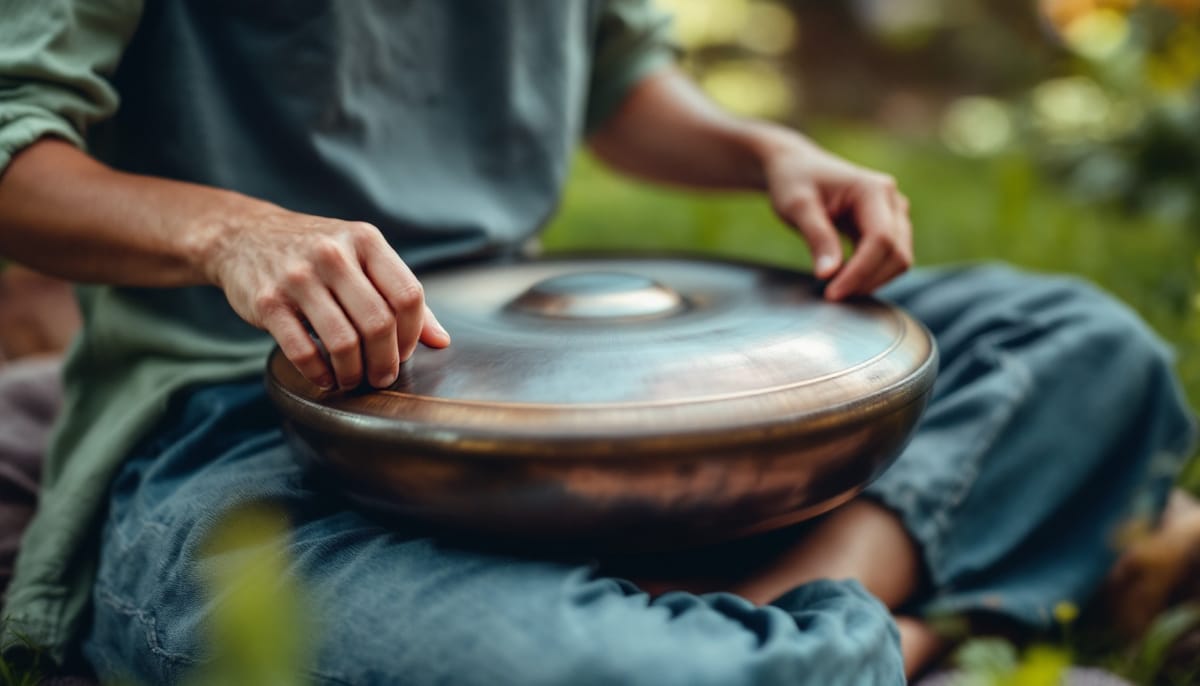
In short — The hang drum is a steel percussion instrument created in Bern in 2000 by Felix Rohner and Sabina Schärer. Its rich harmonics and gentle tones make it popular for sound relaxation, meditation and well-being.
Among the instruments that have found a place in the world of sound relaxation in recent decades, the hang drum holds a truly unique place. With its crystalline, enveloping tones, this relatively recent instrument has won over musicians, relaxation practitioners, and wellness enthusiasts around the world. Let us dive together into the fascinating world of this instrument with hypnotic resonances to understand its history, how it works, and the calm it can bring.
The captivating history of the hang drum
Unlike many instruments used in sound relaxation whose origins date back several millennia, the hang drum is a contemporary creation. Its history begins in Switzerland, in Bern, in the year 2000, in the workshop of two visionary instrument makers: Felix Rohner and Sabina Schärer, founders of the company PANArt.
The name "hang" comes from the Bernese dialect and simply means "hand," referring to the playing technique that consists of striking the instrument with the fingers and palms. This name perfectly reflects the intimate, tactile relationship the musician has with the instrument.
A birth resulting from acoustic research
The creation of the hang drum was not the result of chance. It stems from many years of exploration into the acoustic properties of metals and percussion instruments from around the world. Felix Rohner and Sabina Schärer drew inspiration in particular from:
- The Trinidadian steelpan, an instrument born in the Caribbean in the 20th century
- The ghatam, a traditional Indian terracotta percussion instrument
- The gong and Asian singing bowls
- African udu and various ritual percussion instruments
This cultural and acoustic synthesis gave rise to a unique instrument, capable of producing harmonics of exceptional richness.
Evolution and democratization
Initially produced in very limited quantities by PANArt, the original hang became a rare and coveted object. Faced with this scarcity and global enthusiasm, other manufacturers developed similar instruments, often called handpans to distinguish them from the original Hang, which remains a trademark.
Today, many artisans around the world make these instruments, making their soothing sounds accessible to a wider audience. This democratization has allowed the hang drum to find its place in contemporary wellness and sound relaxation practices.
Anatomy and acoustic functioning
To understand the calming qualities of the hang drum, it is essential to look at its unique structure and the acoustic principles that govern its very particular sound.
A saucer-shaped structure
The hang drum consists of two assembled steel shells, forming a lenticular structure resembling a flying saucer. The upper face, called the "Ding," has a raised central note surrounded by several circular striking zones, generally between 7 and 9, each tuned to a different note.
The lower face, called the "Gu," has a central opening that plays a crucial role in the instrument's resonance. This cavity allows air to circulate and amplifies the vibrations, contributing to the characteristic depth of the sound.
Harmonics of exceptional richness
What distinguishes the hang drum from many other instruments is the complexity of its harmonics. Each struck note generates not only a fundamental frequency, but also a series of natural harmonics that intertwine harmoniously. This sonic richness creates a sensation of envelopment and fullness particularly conducive to relaxation.
The scales used to tune hang drums are carefully chosen for their harmonic qualities. Pentatonic scales, minor modes, or scales inspired by various musical traditions are frequently found, all selected for their ability to invite a state of relaxation.
The calming qualities of the hang drum
The sounds of the hang drum are now widely used in the field of wellness and relaxation. This instrument offers a gentle accompaniment to moments of calm, appreciated by practitioners and listeners alike.
A soothing presence
Listening to the vibrations of the hang drum naturally invites a state of inner calm. The tones produced by the instrument seem to accompany the listener toward greater relaxation. Sound relaxation practitioners regularly report that their clients experience:
- A sense of slowing down
- Deeper, more regular breathing
- A feeling of release in the body
- A calming of the flow of thoughts
Facilitation of meditation
The hang drum is a wonderful support for meditative practice. Its continuous, enveloping sounds provide an auditory anchor that helps the mind focus and let go. Many practitioners use this instrument to deepen their meditation or simply to create an atmosphere conducive to contemplation.
The Sonocrea app also offers relaxation sessions incorporating the sounds of the hang drum, allowing everyone to enjoy these moments wherever they are.
A gentle evening ritual
Listening to the vibrations of the hang drum before bedtime can contribute to a peaceful transition toward rest. By accompanying physical and mental relaxation, these sounds help create the conditions conducive to serene falling asleep and more restorative sleep.
Stimulation of creativity
Beyond its relaxing qualities, the hang drum also has the ability to stimulate imagination and creativity. Its evocative sounds transport the listener into soundscapes that nourish the mind and release creative potential. Artists, writers, and creatives of all backgrounds testify to this positive influence on their creative process.
Integrating the hang drum into your wellness practice
Whether you are a sound relaxation practitioner or simply seeking serenity, there are several ways to integrate the benefits of the hang drum into your daily life.
Sound relaxation sessions with a practitioner
The most immersive way to discover the qualities of the hang drum is to take part in a sound bath session led by a qualified practitioner. During these sessions, you are generally lying comfortably while the therapist plays the instrument, allowing you to fully receive its soothing vibrations.
Personal listening and guided meditation
For an accessible daily practice, listening to hang drum recordings is an excellent option. Many sound relaxation apps, such as Sonocrea, offer quality audio content incorporating this instrument, allowing you to enjoy its benefits at any time of day.
Learning and personal practice
For those who wish to go further, learning to play the hang drum offers an additional dimension. Instrumental practice itself then becomes a form of active meditation. Direct contact with the instrument and the creation of your own melodies provide deep satisfaction and increased benefits.
Here are some tips for getting started:
- Start with entry-level models to familiarize yourself with the instrument
- Choose a pentatonic scale, ideal for beginners
- Take the time to explore the instrument without trying to reproduce specific pieces
- Let your intuition guide your fingers over the different striking zones
The hang drum in the contemporary sound landscape
Beyond its use in sound relaxation, the hang drum has found its place in many musical and artistic contexts. From street musicians to film music composers, this instrument appeals through its versatility and emotional power.
Its sounds can be found in varied musical productions, spa and wellness center atmospheres, yoga and meditation classes, as well as contemporary artistic performances. This omnipresence reflects the universal appeal of its soothing vibrations.
The hang drum thus represents a bridge between tradition and modernity, between East and West, between music and relaxation. It perfectly embodies the contemporary aspiration to find natural wellness tools in a world that is often too noisy and agitated.
Conclusion
The hang drum, despite its relative youth in the history of musical instruments, has established itself as a precious companion for relaxation and wellness. Its Swiss origins, innovative design, and enveloping sounds make it a unique instrument, capable of deeply touching those who listen to it.
Whether you are looking to soften your daily stress, deepen your meditative practice, or simply give yourself moments of serenity, the vibrations of the hang drum can accompany you on that path. In a world where sound wellness is taking on a growing place, this fascinating instrument still has beautiful resonances to offer us.
Want to discover the hang drum and other sound relaxation instruments? Explore the sessions offered on sonocrea.com right now and let yourself be carried away by soothing sounds, wherever you are.
Sonocrea is a relaxation and comfort tool, not a medical device: it does not replace medical advice or care. Do not listen while driving or during any activity that requires alertness. If you have epilepsy or a psychiatric condition, ask a doctor first.
Frequently asked questions
What is the history of the hang drum?
The hang drum was created in 2000 in Bern, Switzerland, by Felix Rohner and Sabina Schärer, founders of PANArt. It was inspired by instruments such as the steelpan, ghatam and singing bowls.
How does the hang drum produce sound?
The hang drum consists of two steel shells. The upper face has a central note and several tuned striking zones, while the lower face has an opening that amplifies vibrations, creating rich harmonics.
What are the benefits of listening to a hang drum?
Listening to the hang drum can invite a state of inner calm, support meditation, and create a peaceful atmosphere. It is used in sound relaxation to encourage slowing down and deeper breathing.
Read also
Découvrez Sonocrea
Créez vos propres séances de bien-être sonore avec notre IA. Fréquences binaurales, hypnose audio et sons ambiants personnalisés.
Essayer gratuitement →