Sound Relaxation for Sleep: A Gentle Evening Ritual
Sound relaxation offers a gentle, cultural way to accompany the transition toward sleep. Learn how to build an evening ritual with nature sounds, soothing frequencies and simple practical tips.
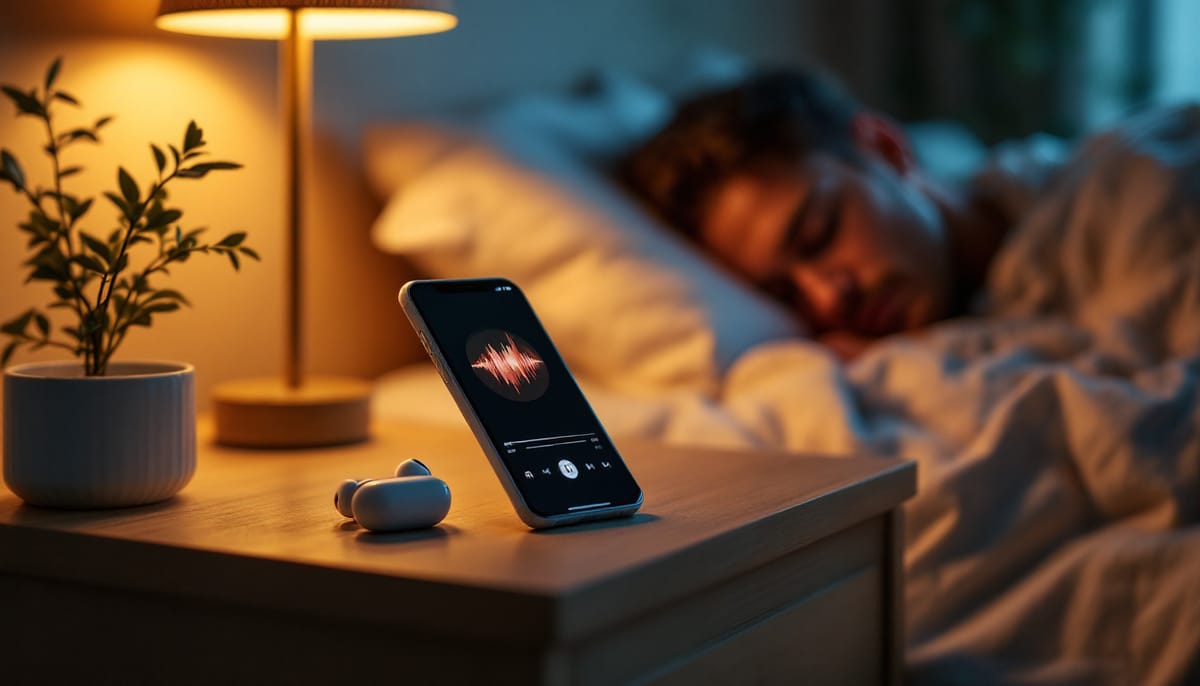
In short — Sound relaxation uses soothing sounds, such as nature sounds and gentle frequencies, to create favourable conditions for drifting toward sleep. A regular evening ritual of 30 to 45 minutes, with low volume and a gradual fade-out, helps the mind associate certain sounds with bedtime.
Sleep is a fundamental pillar of our daily well-being. Yet many people find it difficult to settle into rest, with screens everywhere, everyday concerns, and thoughts that loop endlessly. Finding a path to peaceful sleep can feel like a real challenge.
Sound relaxation is a gentle, cultural approach to accompany the transition toward sleep. By using soothing frequencies, nature sounds, or specially designed soundscapes, it becomes possible to create favourable conditions to drift serenely toward rest. In this article, we explore how to integrate this practice into your evening routine.
Understanding the link between sound and sleep
Our attention is naturally receptive to sound, even during rest phases. This sensitivity, inherited from our ancestors who had to stay alert to their surroundings, can today be used to our advantage to accompany relaxation and the descent toward sleep.
Sounds accompany our states of calm. Certain frequencies and certain types of sounds invite a sense of tranquillity and recovery. Conversely, sudden or unpleasant noises can keep us in a state of alert.
Sound relaxation relies on several gentle principles:
- Sound masking: constant, soothing sounds can cover disruptive noises in the environment
- Rhythmic invitation: certain slow frequencies can accompany the mind toward calmer states
- Mental association: by creating a sound routine, the mind learns to associate certain sounds with bedtime
- Focusing attention: listening to soothing sounds helps divert the mind from restless thoughts
These natural principles explain why so many people find real comfort in using sounds to accompany their evenings.
Create your evening sound ritual with Sonocrea
The comfort of sound relaxation relies largely on the regularity of the practice. Establishing an evening ritual gradually invites body and mind to recognize the signals announcing the time for rest.
Prepare your environment
Even before starting your sound relaxation session, a few simple preparations can amplify the comfort of your practice:
- Dim the lights in your bedroom at least 30 minutes before bedtime
- Make sure the room temperature is cool and pleasant
- Keep screens and sources of blue light away
- Settle comfortably in your bed or in a relaxing armchair
Structure your session
A sound relaxation session for sleep generally follows a natural progression:
Grounding phase (5-10 minutes): Start with sounds that gently capture your attention and help you detach from the day's concerns. Nature sounds such as soft rain, the trickling of a stream, or wind in the leaves are particularly suited to this phase.
Deepening phase (10-15 minutes): Progress toward more enveloping ambiances. Deep sound layers, low frequencies, and continuous sound textures invite deeper muscular and mental release.
Transition phase toward sleep (15-20 minutes): Sounds become more subtle, more spaced out, with gradual silences that naturally accompany the descent into sleep.
The Sonocrea app offers compositions designed precisely to accompany these different phases, allowing a smooth transition toward restful sleep.
The most soothing types of sounds for falling asleep
Not all sounds are equal when it comes to accompanying sleep. Understanding the characteristics of soothing sounds will allow you to make informed choices for your practice.
Nature sounds
Our ancestral connection with the natural world explains why these sounds have such a deeply soothing quality:
- Rain: its regular, constant sound creates a reassuring sound cocoon
- The ocean: the ebb and flow of waves mimics the rhythm of breathing and invites letting go
- The nighttime forest: the subtle sounds of sleeping nature create an atmosphere of absolute calm
- The wind: its gentle variations maintain a slight attention without stimulating wakefulness
Soothing frequencies
Certain sound frequencies are appreciated for their relaxing quality. Without making any claims, many people report a pleasant sensation of well-being when listening to them:
- Low frequencies: they create a sensation of envelopment and safety
- Binaural beats: these sounds can accompany the mind toward states of relaxation
- Harmonic drones: these continuous sound layers accompany meditation and release
Musical ambiances
Certain musical styles are particularly suited to preparing for sleep:
- Ambient music without a marked rhythmic structure
- Minimalist compositions with very slow tempos
- Gentle improvisations with acoustic instruments such as piano or harp
Practical tips to optimize your experience
To get the most out of sound relaxation at bedtime, a few technical and behavioural adjustments can make all the difference.
Choosing your listening equipment
Headphones are not always the best option for sleep. Although they offer optimal sound immersion, they can become uncomfortable during the night. Several alternatives exist:
- A quality speaker: placed at a distance from the bed, it diffuses sounds throughout the room without physical constraint
- An audio headband: specially designed for sleep, it integrates flat, comfortable speakers
- Bone conduction headphones: they leave the ears free while transmitting sound
Managing volume and duration
The ideal volume for nighttime sound relaxation is lower than one generally thinks. Sounds should be perceptible without effort but never dominant. A volume that is too high can paradoxically keep the mind in a state of alert.
As for duration, favour sessions of 30 to 45 minutes, with a gradual fade-out. Most sound relaxation apps offer timers that gradually lower the volume before turning off, thus avoiding a sudden awakening.
Regularity above all
As with any wellness practice, consistency is key. Your mind needs time to create the necessary associations between sounds and the state of deep relaxation. Allow yourself at least two to three weeks of regular practice before appreciating the comfort it brings.
Complementing sound relaxation with other practices
Sound relaxation gains depth when it is part of a broader approach to evening well-being. Here is how to combine it with other gentle practices.
Conscious breathing
Synchronizing your breathing with the sounds you listen to amplifies the relaxing effect. Try to align your inhalation with a recurring sound element and your exhalation with another. This simple yet powerful technique anchors your attention in the present moment.
Guided visualization
Let the sounds create images in your mind. A forest ambiance can transport you to a peaceful clearing, while oceanic sounds mentally place you on a deserted beach at dusk. This spontaneous visualization invites detachment from daily concerns.
Progressive muscle relaxation
While listening, mentally scan your body, consciously releasing each muscle group. Start with the feet and gradually move up to the top of the head. The sounds then serve as support for this soothing bodily exploration.
Evening gratitude
Use the first minutes of your sound session to mentally evoke three positive elements of your day. This simple practice reframes the mind in a disposition favourable to restful sleep.
The essential thing is to find the combination that suits you best. Each person is unique, and what works for one may not suit another. Exploration is part of the path toward more serene evenings.
Conclusion: transform your evenings starting tonight
Sound relaxation represents an accessible and natural approach to accompanying the quality of your rest. By understanding the principles that link sound to relaxation, by creating a personalized ritual, and by choosing the sound ambiances that suit you, you lay the foundations for more serene falling asleep and more restful nights.
The comfort of this practice reveals itself progressively, over days and weeks. Patience and regularity are your best allies in this approach. Every evening spent offering yourself this moment of sound relaxation is an investment in your overall well-being.
Ready to explore the power of sounds to transform your evenings? Discover right now a wide range of sound ambiances designed for relaxation and sleep on try Sonocrea for free. Your next peaceful night is waiting for you.
Sonocrea is a relaxation and comfort tool, not a medical device: it does not replace medical advice or care. Do not listen while driving or during any activity that requires alertness. If you have epilepsy or a psychiatric condition, ask a doctor first.
Frequently asked questions
What sounds are most soothing for falling asleep?
Nature sounds such as rain, the ocean, the nighttime forest and the wind are particularly suited to sleep. Low frequencies, harmonic drones and ambient music with very slow tempos can also accompany the descent toward rest.
How long should a sound relaxation session last before bed?
Favour sessions of 30 to 45 minutes with a gradual fade-out. Many sound relaxation apps offer timers that slowly lower the volume before turning off, which helps avoid a sudden awakening during the night.
Which equipment is best for listening to sounds at bedtime?
Headphones can become uncomfortable during the night. A quality speaker placed away from the bed, an audio headband with flat speakers, or bone conduction headphones that leave the ears free are often more suitable alternatives.
Read also
Découvrez Sonocrea
Créez vos propres séances de bien-être sonore avec notre IA. Fréquences binaurales, hypnose audio et sons ambiants personnalisés.
Essayer gratuitement →