Audio Hypnosis vs Guided Meditation: What's the Difference?
Audio hypnosis and guided meditation are often confused, yet they rest on different mechanisms. Here is how they differ and how to choose the one that suits you.
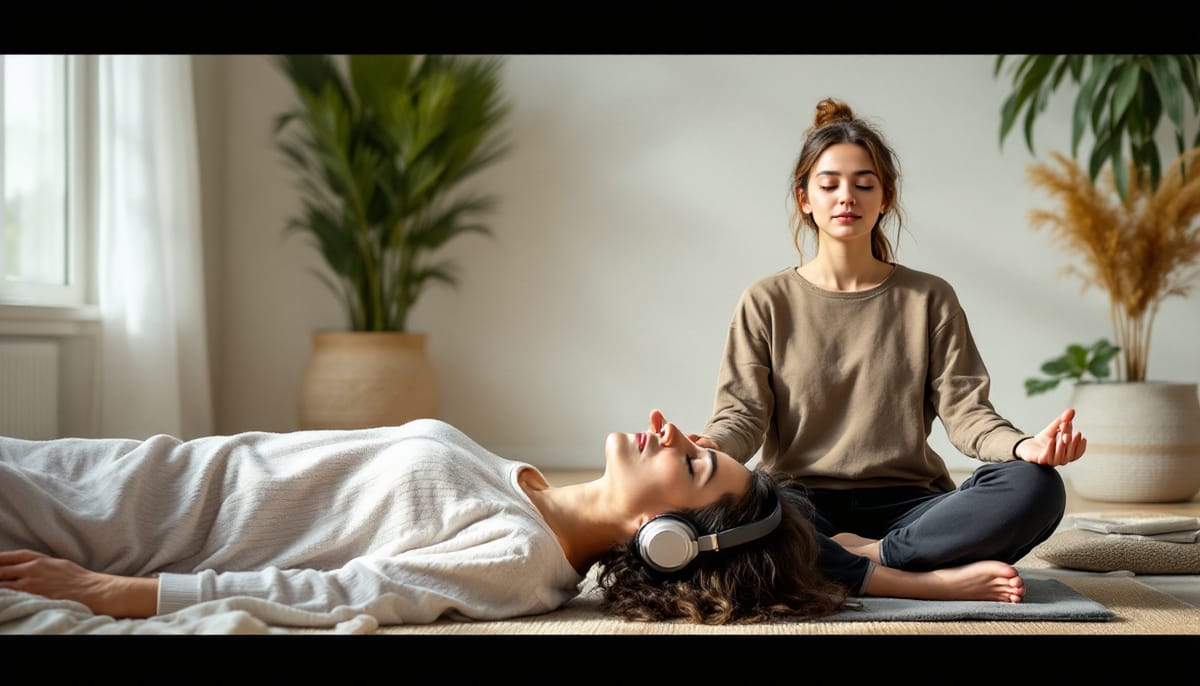
In short — Audio hypnosis induces a light trance through suggestion to support a specific goal, while guided meditation trains attention and presence without altering consciousness. Both use the voice and aim at well-being, but differ in intention, the listener's role and session structure.
In our daily quest for serenity and balance, two sound practices stand out in particular: audio hypnosis and guided meditation. Often confused, sometimes used interchangeably, these two approaches certainly share common ground, but they rest on fundamentally different mechanisms.
Whether you are new to the world of sound relaxation or a regular practitioner looking to refine your understanding, this article sheds light on the specificities of each method. Understanding these differences will allow you to choose the approach best suited to your needs and your personal wellness goals.
Understanding the foundations of each practice
Before exploring the differences, it is essential to clearly define what each of these practices encompasses. This basic understanding will help you better grasp their respective mechanisms.
Audio hypnosis: an altered state of consciousness
Audio hypnosis consists of a vocal recording designed to induce a hypnotic state. This state, often described as a light trance, is characterized by intense focused attention and heightened receptivity to suggestions. Contrary to popular belief, hypnosis does not involve a loss of control: you remain conscious and can interrupt the experience at any time.
Audio hypnosis sessions generally follow a precise structure:
- Induction phase: progressive relaxation of body and mind
- Deepening phase: intensification of the state of receptivity
- Suggestion phase: messages targeted toward a specific goal
- Return phase: gentle reorientation toward the ordinary waking state
Guided meditation: training the attention
Guided meditation, for its part, is a practice in which a voice accompanies the meditator in an exercise of attention and presence. The goal is not to modify the state of consciousness, but rather to train the mind to observe, to concentrate, and to cultivate certain qualities such as kindness or acceptance.
The forms of guided meditation are varied:
- Mindfulness meditation: observation of sensations, thoughts, and emotions
- Breath meditation: anchoring in the breath
- Body scan: attentive exploration of each part of the body
- Positive visualization: creation of soothing mental images
- Compassion meditation: development of kindness toward oneself and others
The fundamental differences between the two approaches
Although these two practices use the voice as their main vehicle and aim for well-being, they differ on several essential aspects that deserve to be explored in detail.
The intention and the goal sought
Guided meditation primarily aims to develop a quality of being: presence, attention, equanimity. It is a mental training that bears fruit with regular practice. The goal is to learn to be fully present, without seeking to modify anything.
Audio hypnosis, on the other hand, generally pursues a more targeted goal: to support a change in behavior, transform a perception, or anchor new resources. It works with the subconscious to facilitate specific changes.
The listener's role
In guided meditation, the practitioner is invited to actively observe their experience. They develop a posture of benevolent witness to their own mental processes. Attention is directed but remains under their conscious control.
During an audio hypnosis session, the listener adopts a more receptive posture. They let the suggestions enter their mind without analyzing them. This openness facilitates the integration of the messages at the subconscious level.
The structure of the session
Guided meditation sessions can be very free in their form. They often invite exploration without a precise direction, to welcome what arises moment after moment.
Audio hypnosis sessions follow a more defined architecture, with distinct phases and a calibrated progression toward the goal of the session. Each element is designed to optimize receptivity and the effectiveness of the suggestions.
The respective benefits for daily well-being
Each practice offers distinct advantages that can meet different needs depending on life's moments and personal aspirations.
What guided meditation can bring
The regular practice of guided meditation is associated with many benefits observed by practitioners:
- Development of the capacity for attention and concentration
- Better emotional management in daily life
- Reduction of the feeling of stress and mental agitation
- Improvement of sleep quality
- Cultivation of a gentler relationship with oneself
- Development of resilience in the face of difficulties
Guided meditation is particularly appreciated for its educational aspect. Over time, the practitioner can gradually do without the guide and meditate autonomously.
What audio hypnosis can bring
Audio hypnosis is often favored for more specific goals:
- Support in managing occasional stress
- Support for improving self-confidence
- Help with mental preparation before an event
- Facilitation of deep relaxation and letting go
- Support toward more serene sleep
- Strengthening of motivation to achieve one's goals
Audio hypnosis can produce effects felt from the very first sessions, which makes it appealing to those seeking an immediate experience of relaxation.
How to choose between audio hypnosis and guided meditation
The choice between these two practices is not exclusive. Many people integrate both into their wellness routine, depending on their needs at the moment. Here are a few pointers to guide you.
Choose guided meditation if you wish to:
- Develop an autonomous practice over the long term
- Cultivate mindfulness in your daily life
- Learn to observe your thoughts without identifying with them
- Build a regular discipline of mental well-being
- Explore different meditative traditions
Favor audio hypnosis if you are looking for:
- Targeted support toward a precise goal
- An experience of deep and immersive relaxation
- A complementary tool in a process of change
- An approach that works with the subconscious
- Results perceptible quickly
The importance of sound quality
Whatever your choice, the quality of the sound environment plays a crucial role in the effectiveness of the practice. A pleasant voice, a suitable rhythm, and possibly background soundscapes can considerably enrich the experience. Applications such as Sonocrea offer carefully designed sound worlds that can accompany both your meditation sessions and your moments of deep relaxation.
Combining the two approaches for optimal well-being
Far from opposing each other, audio hypnosis and guided meditation can complement each other harmoniously in a balanced wellness routine.
A beneficial synergy
Many practitioners find that regular meditation improves their receptivity to hypnosis sessions. Conversely, hypnosis can help release certain blockages that hinder meditative practice.
Here is how you could integrate both:
- In the morning: a short guided meditation to start the day mindfully
- During the day: meditative breaks of a few minutes to maintain your grounding
- In the evening: a targeted audio hypnosis session according to your needs at the moment
- Before sleep: sound relaxation to promote falling asleep
The contribution of sound relaxation
Beyond these two practices, the world of sound relaxation offers other valuable resources. Sound baths, soothing frequencies, and nature sounds are all complementary tools to enrich your wellness palette. The Sonocrea application brings together these different approaches to allow you to explore what suits you best.
Conclusion: find your path to serenity
Audio hypnosis and guided meditation represent two complementary paths toward a better-being accessible to all. The first works with the mind's natural suggestibility to support targeted changes, while the second gradually develops our capacity to be present and serene.
The essential thing is not to definitively choose one or the other, but to experiment with curiosity and kindness to discover what resonates with you. Your practice will naturally evolve over time, according to your needs and your personal journey.
Whatever approach you favor, the important thing is to grant yourself these precious moments of pause in your daily life. In a world that is often agitated, taking care of one's inner balance is not a luxury, but a necessity.
Ready to explore these practices? Discover sound worlds designed to accompany your relaxation and your well-being at sonocrea.com. Whether you choose meditation, hypnosis, or simply a soothing sound bath, give yourself the gift of a moment of serenity.
Frequently asked questions
What is the difference between audio hypnosis and guided meditation?
Audio hypnosis induces a light trance and uses suggestions toward a specific goal, working with the subconscious. Guided meditation trains attention and presence, without seeking to modify the state of consciousness. They differ in intention, the listener's role and the structure of the session.
Do you lose control during an audio hypnosis session?
No. Contrary to popular belief, audio hypnosis does not involve a loss of control. You remain conscious throughout the experience and can interrupt the session at any time. The state is described as a light trance with focused attention and heightened receptivity.
Can you combine audio hypnosis and guided meditation?
Yes. Many people integrate both into their wellness routine. Regular meditation can improve receptivity to hypnosis sessions, while hypnosis may help release certain blockages that hinder meditative practice. A short guided meditation in the morning and a hypnosis session later can complement each other.
Read also
Découvrez Sonocrea
Créez vos propres séances de bien-être sonore avec notre IA. Fréquences binaurales, hypnose audio et sons ambiants personnalisés.
Essayer gratuitement →