Nature Sounds for Meditation: A Cultural Guide
Explore the five most powerful nature sounds for meditation and learn how to build a simple practice using rain, ocean, forest, river, and distant thunder.
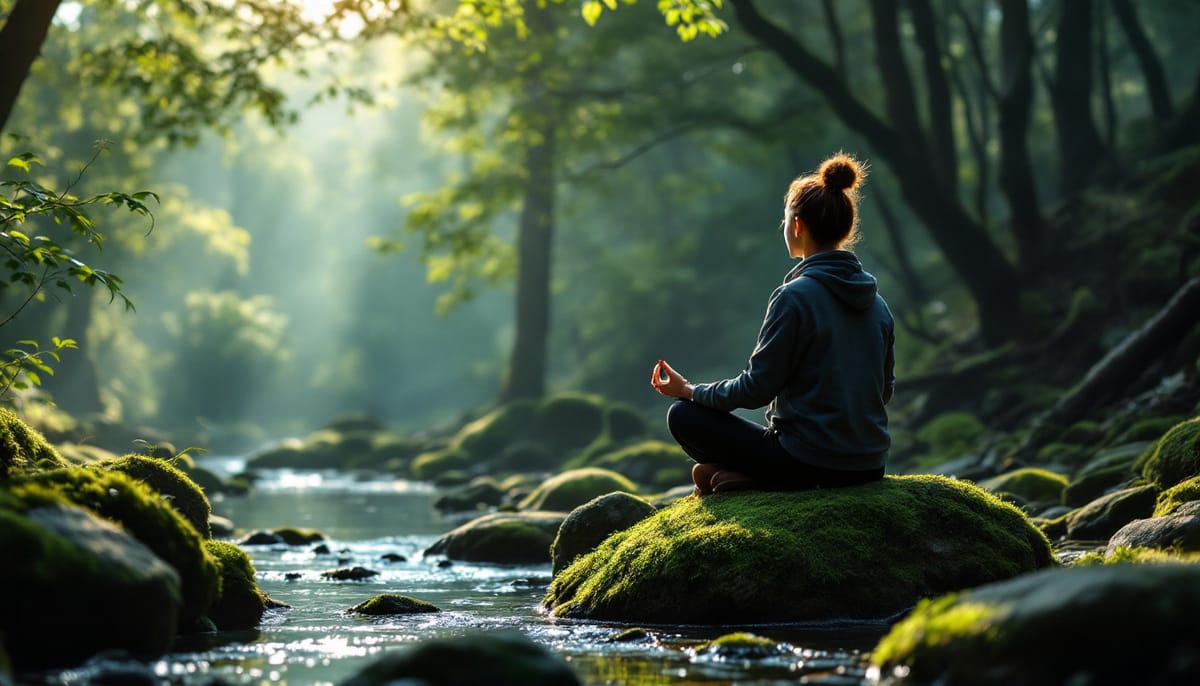
In short — Nature sounds calm us because they offer a timeless, gentle invitation to pause, unlike jarring artificial noises. The five most powerful sounds for meditation are rain, ocean, forest, river, and distant thunder, each suited to different intentions such as calm, concentration, or sleep. A simple practice involves choosing an intention, selecting a sound, and listening at a comfortable volume for at least ten minutes.
Why do nature sounds calm us instantly?
You have certainly already felt that sense of immediate peace upon hearing rain falling on leaves, or ocean waves breaking on the shore. It is no coincidence — it is a gentle invitation to pause.
Conversely, artificial sounds (traffic, alarms, notifications) can feel jarring and disruptive. In contrast, natural sounds have a timeless quality that many cultures have long used to accompany contemplation and rest.
The 5 most powerful nature sounds for meditation
1. Rain 🌧️
The sound of rain is the most universally soothing. It combines a soft, steady hush with an irregular yet predictable rhythm that invites a calm and meditative atmosphere. Ideal for meditation beginners.
Best for: Mindfulness meditation, falling asleep, concentration
2. The ocean 🌊
The rhythm of the waves (generally 12-15 cycles per minute) is very close to the natural rhythm of relaxation.
Best for: Deep meditation, anxiety management, conscious breathing
3. The forest 🌲
"Forest bathing" (Shinrin-yoku in Japanese) is a recognized cultural practice in Japan.
Best for: Moving meditation, recovery from chronic stress, creativity
4. The river 💧
The continuous murmur of a river creates a gentle, flowing sound — often considered more conducive to concentration and sleep than plain white noise. Its soft variability keeps the mind in a relaxed state of wakefulness.
Best for: Creative work, studying, Vipassana meditation
5. Distant thunder ⛈️
Paradoxically, the sound of a distant storm — soft thunder combined with rain — is one of the most effective sounds for inducing deep sleep. The associated atmosphere of a storm often brings a sense of safety that facilitates falling asleep.
Best for: Deep sleep, nighttime recovery
How to create your natural sound meditation practice
- Choose your intention: calm, concentration, sleep, or creativity
- Select the appropriate sound according to the table above
- Optimal volume: 50-60 dB (equivalent to a normal conversation)
- Duration: 10 minutes minimum to observe a measurable effect
- Posture: seated comfortably or lying down, eyes closed
Sonocrea: nature augmented by AI
Sonocrea combines nature sounds with AI-generated binaural frequencies to create tailor-made sound experiences, more powerful than natural sounds alone. Your current emotional profile determines the perfect mix.
Sonocrea is a relaxation and comfort tool, not a medical device: it does not replace medical advice or care. Do not listen while driving or during any activity that requires alertness. If you have epilepsy or a psychiatric condition, ask a doctor first.
Frequently asked questions
What are the best nature sounds for meditation?
The article lists rain, the ocean, the forest, the river, and distant thunder as the five most powerful nature sounds for meditation. Each is best suited to different intentions, such as mindfulness, deep relaxation, creativity, or sleep.
How long should I listen to nature sounds for meditation?
The article recommends a minimum duration of ten minutes to observe a measurable effect. You can sit comfortably or lie down with your eyes closed, and keep the volume at around 50–60 dB, equivalent to a normal conversation.
What is forest bathing and how is it used in meditation?
Forest bathing, or Shinrin-yoku, is a recognised cultural practice in Japan. The article suggests the sound of the forest is best for moving meditation, recovery from chronic stress, and creativity.
Read also
Découvrez Sonocrea
Créez vos propres séances de bien-être sonore avec notre IA. Fréquences binaurales, hypnose audio et sons ambiants personnalisés.
Essayer gratuitement →