Lili Boulanger and Clara Schumann: Women Composers for the End of the Day
Lili Boulanger and Clara Schumann wrote music of rare sensitivity. Here is how their works can accompany a calm, attentive end of the day.
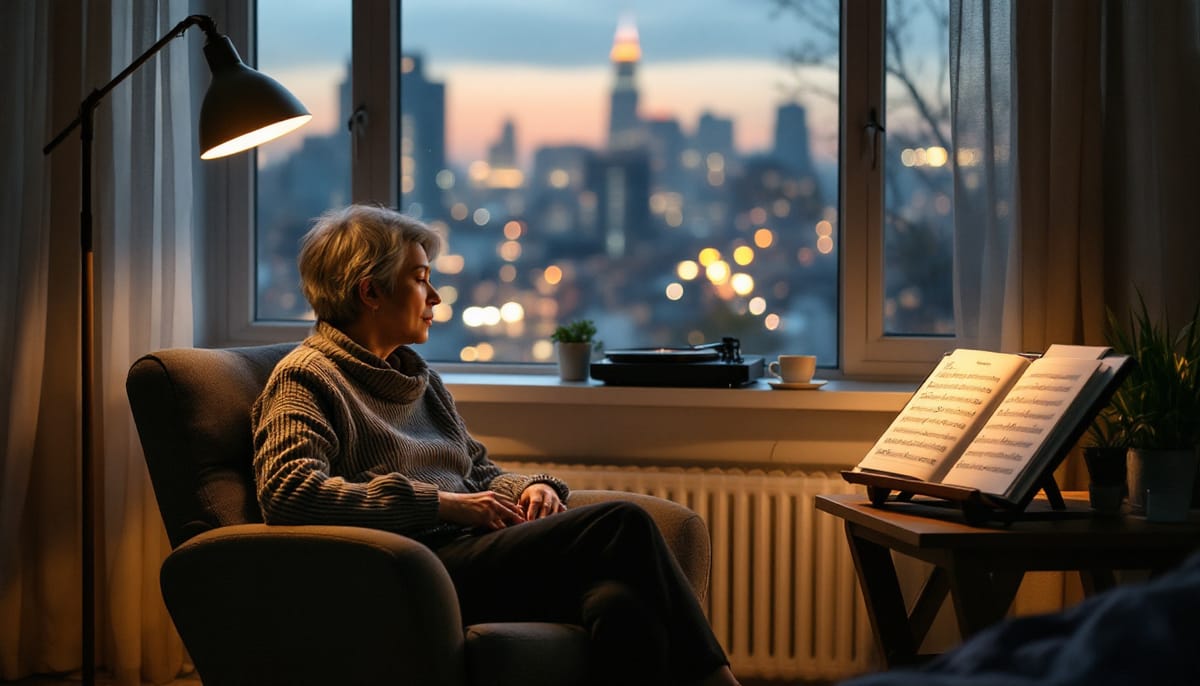
In short — The music of Clara Schumann and Lili Boulanger offers a gentle way to slow down at the end of the day. Their piano pieces and vocal works create suspended atmospheres that invite attentive listening, silence and calm.
The end of the day is a moment of transition. We leave behind the rhythm of obligations to enter a slower, more intimate time. To accompany this transition, music offers a simple and profound path. And among the works that soothe without ever dulling attention, those of Lili Boulanger and Clara Schumann hold a special place. Two women composers, two eras, two styles of writing, and the same ability to create an inhabited space of calm. In this article, we explore their world and the way their music can nourish a cultural sound relaxation, in the manner in which Sonocrea conceives of listening: rooted in literature, music, and philosophy.
Two women composers, two paths
Clara Schumann (1819-1896) was one of the most famous pianists of her century, and a composer whose work, long overshadowed by that of her husband Robert Schumann, is today reclaiming its rightful place. Her piano pieces, her lieder, and her chamber music reveal a lyrical style of writing, often tender, sometimes anxious, always of great finesse of expression.
Lili Boulanger (1893-1918) made history by becoming, in 1913, the first woman to win the Grand Prix de Rome for composition. Her music, at once delicate and intense, bears the mark of a rare sensitivity and a remarkable harmonic mastery. Her Prière or her Nocturnes for violin and piano create suspended atmospheres, conducive to contemplation.
These two paths remind us that musical creation has never been the preserve of a single gender. Alongside them, one might think of the Persian poet Mahsati Ganjavi, whose quatrains celebrate the beauty of everyday life, or of the Ethiopian composer and singer Tsehaytu Beraki, whose music accompanies moments of gathering and remembrance. The diversity of women's voices around the world enriches our listening as much as it illuminates our history.
What their music offers to body and mind
Listening to a piece by Clara Schumann at the end of the day means accepting to slow down. Her Romances for piano, for example, unfold long phrases, gentle harmonies, a steady breathing. Nothing in them is harsh; everything invites you to drop your shoulders, to let your breath settle.
In Lili Boulanger's work, the sonic material is more colorful, sometimes denser, but always traversed by a form of clarity. Her vocal works, such as Clairières dans le ciel, play on airy textures that give the impression of a space opening up. For a sound relaxation session, these pieces can be listened to alternately with stretches of silence, or integrated into an original script inspired by the wisdom traditions of the world.
This approach echoes that of diverse traditions. In the Arab and Persian world, learned classical music, such as the Persian radif, offers slow cycles that invite attentive listening. In India, the dhrupad, an ancient form of vocal music, develops a meditative slowness that is not unlike certain pages of Boulanger. These traditions are not recipes; they are inheritances to be listened to with respect, without reducing them to a decorative use.
Building a musical end of the day
A successful end of the day does not require great means. An armchair, soft light, a moment without screens, and a selection of carefully chosen pieces are enough. Here is a suggested sequence, to be adapted according to your wishes:
- First listening: a slow piece by Clara Schumann, for example a Romance without words, to set the frame.
- Breathing: a few minutes of silence, listening to your own breathing, without forcing.
- Second listening: a work by Lili Boulanger, such as a Nocturne, to open the inner space.
- Writing or reading: a short text, a poem, or a few lines noted in a notebook.
- Closing: a return to silence, or a very gentle piece, to close the day.
This sequence can be enriched by literary references. One might read a poem by the Japanese poet Yosano Akiko, whose verses celebrate the fragility of things, or an excerpt from the Senegalese writer and philosopher Léopold Sédar Senghor, whose poetry blends rhythm and contemplation. These readings, read aloud or simply skimmed, extend the musical listening without competing with it.
In the Sonocrea app, these principles are put into practice through cultural sound relaxation sessions: original scripts, inspired by literature, music, and philosophy, accompanied by chosen soundscapes. The goal is never to perform, but to create a comfort of listening, a space where one can settle.
Attentive listening, between heritage and presence
The music of Clara Schumann and Lili Boulanger gains from being listened to without background. One can, for example, choose a recording, close one's eyes, and follow a single line: the melody, or the bass, or the timbre of the piano. This selective listening, close to what certain concentration practices offer, helps anchor attention in the present moment.
Other cultures offer complementary paths. In the traditions of Native American peoples of North America, storytelling and song occupy a central place in moments of gathering; it is not a matter of reproducing these practices, but of retaining the idea that voice and narrative can structure a time of calm. In East Asia, the tea ceremony, as practiced in Japan, offers a simple framework in which gesture and sound are in harmony. Here again, borrowing must remain respectful and conscious of its origin.
For a personal practice, one can alternate listenings: a piece by Clara Schumann on Monday, a work by Lili Boulanger on Wednesday, a poem read aloud on Friday. This regularity, without obligation, creates a reassuring landmark in the week.
Silence as an extension
After listening, silence is not a void. It is a space that extends the music. One can remain seated for a few minutes, doing nothing, letting the last notes dissipate. This gentle transition is often what our busy days lack.
The women composers we have mentioned, like the poets and philosophers of various cultures, remind us that beauty is not a luxury: it is a way of inhabiting time. Whether one chooses a Romance by Clara Schumann, a Nocturne by Lili Boulanger, or a poem by Yosano Akiko, the essential thing is to grant oneself this moment.
To go further, discover the cultural sound relaxation sessions offered by Sonocrea: original scripts, chosen atmospheres, and an invitation to make the end of the day a time for yourself. Visit https://sonocrea.com.
Precaution: do not listen while driving; in case of epilepsy or psychiatric disorders, ask a doctor's advice.
Frequently asked questions
Which works by Clara Schumann suit the end of the day?
Her Romances for piano unfold long phrases, gentle harmonies and a steady breathing. Nothing in them is harsh, and they invite you to drop your shoulders and let your breath settle.
What characterises Lili Boulanger's music?
Her music is at once delicate and intense, marked by rare sensitivity and harmonic mastery. Works such as Prière, the Nocturnes or Clairières dans le ciel create suspended, airy atmospheres conducive to contemplation.
How can I build a musical end of the day?
A slow piece by Clara Schumann, a few minutes of silence, then a work by Lili Boulanger, followed by a short reading or writing, and a closing return to silence. An armchair, soft light and no screens are enough.
Read also
Découvrez Sonocrea
Créez vos propres séances de bien-être sonore avec notre IA. Fréquences binaurales, hypnose audio et sons ambiants personnalisés.
Essayer gratuitement →