The Guqin, Zither of Chinese Scholars: Listening as an Art of Living
The guqin, a seven-stringed zither, is more than an instrument: it is an art of living. Explore its history, philosophy, and how to listen for serenity.
In short — The guqin is a seven-stringed Chinese zither that scholars have used for meditation and poetry for over two millennia. Its gentle tones and inhabited silences invite attentive listening, an art of living shared by many cultures. Today, it inspires cultural sound relaxation for calm and well-being.
The Guqin, a Zither for the Soul
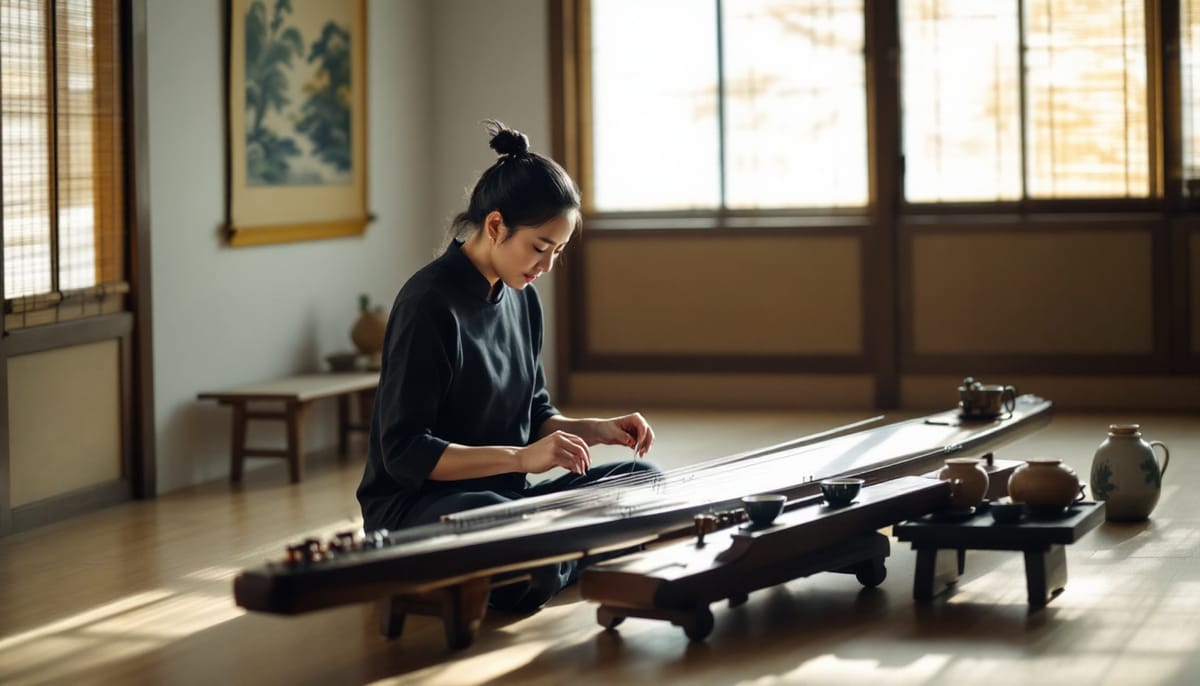
Imagine a seven-stringed instrument resting on a low table, in a room bathed in soft light. The guqin, the emblematic zither of ancient China, is far more than a musical instrument: it is an art of living, an invitation to slow down, to listen, and to cultivate serenity. For more than two millennia, it has accompanied Chinese scholars in their moments of meditation, poetry, and reflection. Today, its music soothes and inspires, and its spirit resonates with the practices of cultural sound relaxation.
In this article, we explore the history, philosophy, and practice of the guqin, as well as the way its listening can enrich our daily lives. We will see how this instrument fits into a tradition of attentive listening, shared by other cultures, and how it can help us find inner balance.
An Instrument Rich in History and Symbolism
The guqin, also called qin, is one of the oldest plucked string instruments in China. Its elongated shape evokes the phoenix, and its seven strings correspond to the seven days of the week or the seven notes of the Chinese scale. Scholars regarded it as an indispensable companion, alongside poetry, calligraphy, and painting. Playing the guqin was not reserved for professional musicians: it was a practice cultivated by scholars, poets, and philosophers, men and women alike, who saw in it a way to express their emotions and connect with nature.
The music of the guqin is characterized by deep tones, delicate harmonics, and inhabited silences. Each note is played with intention, and listening becomes a meditation. Scholars sometimes gathered in small circles to share their compositions, in a spirit of conviviality and mutual respect.
Listening as an Art of Living: Philosophy and Practice
In the Chinese tradition, listening to the guqin is part of a holistic vision of harmony between humanity and nature. The sound of the qin is associated with the wood element, with calm, and with wisdom. In this music, scholars sought a form of purification of the mind, a return to what is essential.
This approach finds echoes in other cultures. In India, the raga is a melodic framework that invites contemplative listening, often associated with particular times of day. In Japan, the tea ceremony values attention to the sounds of water and objects. In the Middle East, Persian classical music, with its dastgah modes, creates atmospheres conducive to reverie. In West Africa, griots pass down stories and melodies that soothe and bring people together. All these traditions share the idea that attentive listening is an art of living.
Today, we can draw inspiration from these wisdoms to create moments of sound relaxation. The Sonocrea app offers soundscapes inspired by these cultures, for relaxation with complete simplicity.
The Guqin and Cultural Sound Relaxation
Cultural sound relaxation consists of using sounds and music drawn from traditions around the world to promote well-being, without any therapeutic dimension. The guqin, through its gentleness and slowness, is particularly suited to this use. Its vibrations envelop the listener and invite them to release tension.
Listening to the guqin can be done in different ways: as background sound during a creative activity, during a meditative break, or simply to savor a moment of calm. Sonocrea's original compositions draw inspiration from these aesthetics to offer an immersive and soothing experience.
It is important to remember that sound relaxation does not replace medical advice. If you have specific concerns, consult a healthcare professional.
Practicing Listening: Tips and Inspiration
To integrate guqin listening into your daily life, here are a few suggestions:
- Create a calm space: choose a place where you will not be disturbed, and turn off screens.
- Take your time: allow yourself at least ten minutes for undistracted listening.
- Breathe deeply: let the sound pass through you, without trying to analyze it.
- Vary the pleasures: alternate with other relaxing music, such as the Japanese koto, the Persian santur, or Corsican polyphonic singing.
You can also explore the stories of women and men who have shaped the history of the guqin, such as the poet Li Qingzhao or the philosopher Confucius, to nourish your practice.
Conclusion: An Invitation to Listen
The guqin reminds us that listening is an art to be cultivated. By immersing ourselves in its music, we give ourselves a pause of serenity, an inner journey inspired by centuries of wisdom. Whether you are a musician, a poet, or simply in search of calm, let yourself be carried by the sounds of the guqin and discover a new dimension of cultural sound relaxation.
To extend this experience, download the Sonocrea app and explore our soundscapes inspired by traditions around the world. Visit sonocrea.com to learn more.
Precaution: do not listen while driving; if you have epilepsy or psychiatric disorders, ask a doctor for advice.
Frequently asked questions
What is a guqin?
The guqin is a seven-stringed plucked zither from ancient China, associated with scholars and cultivated for meditation, poetry, and reflection. Its elongated shape evokes the phoenix, and its music features deep tones and delicate harmonics.
How can I listen to the guqin for relaxation?
Create a calm space, turn off screens, and allow at least ten minutes for undistracted listening. Breathe deeply and let the sound pass through you without analysing it. You can also vary with other relaxing music like the Japanese koto.
Read also
Découvrez Sonocrea
Créez vos propres séances de bien-être sonore avec notre IA. Fréquences binaurales, hypnose audio et sons ambiants personnalisés.
Essayer gratuitement →