Tibetan Bowls: A Journey into Sound Relaxation
Explore the world of Tibetan bowls: how they produce soothing sounds, their reported benefits for relaxation, and practical ways to use them daily.
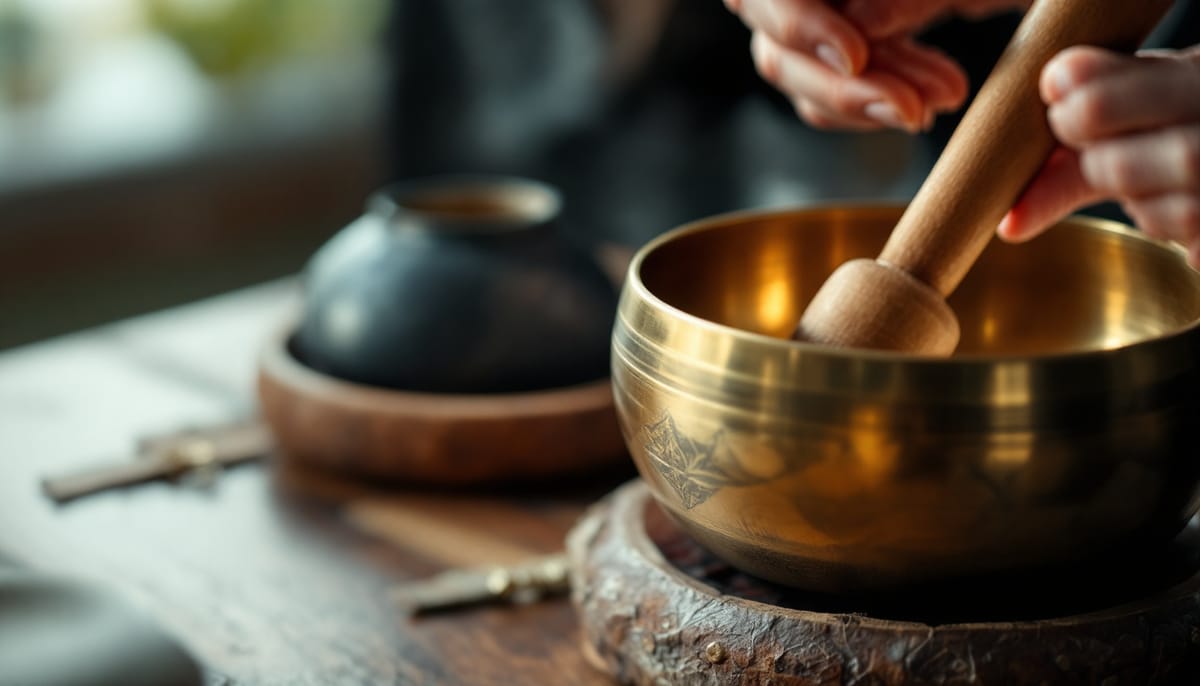
In short — Tibetan bowls are ancient instruments that produce harmonic sounds to promote relaxation. Their vibrations can help calm the mind and reduce stress, and they can be easily integrated into daily routines for well-being.
In our modern society where stress has become an almost permanent companion, more and more people are turning to ancestral methods to rediscover calm and serenity. Among these approaches, Tibetan bowls hold a privileged place. These ancient instruments, originating from the Himalayan regions, produce enveloping tones that naturally invite relaxation. But how can these simple metal objects help us better manage the tensions of daily life? Let's explore together this fascinating world of sound relaxation.
What is a Tibetan bowl and how does it work?
Tibetan bowls, also called singing bowls, are traditional musical instruments made from an alloy of several metals. Historically, a mixture of seven metals corresponding to the seven planets known in ancient astrology is often mentioned: gold, silver, mercury, copper, iron, tin, and lead. Today, most quality bowls are mainly composed of bronze, an alloy of copper and tin.
The way a Tibetan bowl works relies on a simple yet powerful acoustic principle. When the bowl is struck with a mallet or the mallet is rubbed around its outer rim, the metal begins to vibrate. This vibration produces a sound rich in harmonics, meaning several simultaneous sound frequencies that create a complex and enveloping tone.
The different types of Tibetan bowls
- Traditional hand-hammered bowls: handmade using ancestral techniques, each piece is unique with its own sound characteristics
- Cast bowls: produced more industrially, they offer a more uniform sound and are generally more affordable
- Quartz crystal bowls: although different from traditional Tibetan bowls, they are often used as a complement for their crystalline tones
Each bowl has its own fundamental frequency, determined by its size, thickness, and composition. Larger bowls produce low, deep sounds, while smaller ones emit higher tones. This diversity makes it possible to create varied sound atmospheres according to each person's needs.
The felt benefits of Tibetan bowls on stress
Many people report a sensation of deep relaxation when listening to or practicing with Tibetan bowls. Although it is important to clarify that these effects belong to the realm of well-being and not medicine, several mechanisms may explain these positive experiences.
The soothing effect of sound vibrations
The sounds produced by Tibetan bowls have particular characteristics that naturally promote relaxation. Their harmonic richness creates an enveloping sound environment that can help divert attention from stressful thoughts. The mind, captivated by these unusual tones, tends to release its state of hypervigilance.
Moreover, the vibrations of the bowls are often described as "massaging" by those who experience them. When a bowl is placed near the body or directly on it, the vibrations spread and create a particular physical sensation that many find soothing.
The invitation to mindfulness
Listening attentively to a Tibetan bowl is itself an exercise in mindfulness. Focusing on the subtle variations of the sound, following the resonance until its natural fading, observing the sensations it brings: all practices that anchor you in the present moment and distance you from anxious rumination.
The main benefits reported by users include:
- A feeling of inner calm and serenity
- An improvement in sleep quality
- A reduction in muscle tension
- A feeling of recentering and mental clarity
- Better management of emotions in daily life
How to integrate Tibetan bowls into your daily routine
One of the great advantages of practicing with Tibetan bowls is its flexibility. Whether you have five minutes or an hour, whether you are at home or at the office, there are ways to integrate this practice into your daily life.
The morning centering ritual
Starting the day with a few minutes of Tibetan bowl practice can set a positive tone for the hours ahead. Here is a simple practice:
- Sit comfortably in a quiet place
- Take three deep breaths to ground yourself
- Gently strike the bowl and let the sound unfold
- Follow the vibration until it fades naturally
- Repeat three to five times depending on the time available
The decompression break during the day
When stress rises during the workday, a short sound break can work wonders. Even two to three minutes of attentive listening is sometimes enough to reset your state and return to a more serene mood. If you cannot use a physical bowl at the office, apps like Sonocrea offer high-quality recordings of Tibetan bowls accessible anywhere on your smartphone.
The evening ritual for restful sleep
The time before bedtime is particularly conducive to practicing with Tibetan bowls. The low, enveloping tones help ease the transition between the day's activity and nighttime rest. A ten- to fifteen-minute session can significantly improve the quality of falling asleep for many people.
Practical techniques for using your Tibetan bowl
If you own a Tibetan bowl or are considering getting one, here are some techniques to make the most of it in your quest for relaxation.
The striking technique
The simplest method is to gently strike the outer rim of the bowl with a mallet. The quality of the sound will depend on several factors:
- The striking angle: an angle of about 45 degrees generally produces the best sound
- The force used: start gently and adjust according to the desired intensity
- The type of mallet: padded mallets produce softer sounds, while bare wooden mallets create brighter tones
The rubbing technique
To obtain the characteristic singing sound, rotate the mallet around the outer rim of the bowl with constant pressure. This technique requires a bit of practice but produces a continuous, hypnotic sound. The secret lies in the regularity of the movement and maintaining firm contact between the mallet and the metal.
Creating a complete sound atmosphere
For a more immersive experience, you can combine several approaches:
- Alternate striking and rubbing
- Use several bowls of different sizes
- Include moments of silence between sounds
- Accompany the practice with conscious breathing
For those who wish to explore these sounds without immediately investing in a physical instrument, the Sonocrea app offers a library of authentic Tibetan bowl sounds, allowing you to discover this practice at your own pace from anywhere.
Tips for choosing and caring for your Tibetan bowl
If you decide to acquire your own Tibetan bowl, a few tips can guide you toward an informed choice.
Selection criteria
The most important criterion is undoubtedly the sound. Before any purchase, if possible, listen to the bowl in person. The tone should please you and naturally soothe you. Beyond this obvious point, consider:
- Size: medium bowls (15-20 cm in diameter) offer a good compromise between portability and sound richness
- Weight: a heavier bowl generally vibrates longer
- Finish: hand-hammered bowls often have more complex tones
- Intended use: for personal practice or group sessions, the needs differ
Care and precautions
Tibetan bowls are sturdy objects but deserve some attention:
- Clean them regularly with a soft cloth to maintain their shine
- Avoid impacts that could alter their sound
- Store them in a safe place, ideally on a dedicated cushion
- Do not expose them to excessive humidity
Conclusion: toward a regular practice for lasting well-being
Tibetan bowls represent an accessible and pleasant gateway into the world of sound relaxation. Practicing regularly, even just a few minutes a day, can be a valuable tool for managing daily stress. Whether you choose to acquire your own instrument or explore this practice through quality recordings, the essential thing is to grant yourself these moments of sound pause amid the tumult of daily life.
Consistency is key: as with any well-being practice, the benefits accumulate over time. Start modestly, with short sessions, and let your practice evolve naturally according to your needs and how you feel.
Ready to discover the benefits of sound relaxation? Explore right now a wide collection of soothing sounds, including authentic Tibetan bowls, on Sonocrea.com. Your journey toward greater serenity starts here.
Sonocrea is a relaxation and comfort tool, not a medical device: it does not replace medical advice or care. Do not listen while driving or during any activity that requires alertness. If you have epilepsy or a psychiatric condition, ask a doctor first.
Frequently asked questions
What are Tibetan bowls made of?
Tibetan bowls are traditionally made from an alloy of several metals, often seven, but today most quality bowls are mainly composed of bronze, an alloy of copper and tin.
How do Tibetan bowls help with relaxation?
The harmonic sounds and vibrations of Tibetan bowls can create an enveloping sound environment that helps divert attention from stressful thoughts and promotes a sense of calm and mindfulness.
Can I use Tibetan bowls without owning one?
Yes, apps like Sonocrea offer high-quality recordings of Tibetan bowls that you can access anywhere on your smartphone, allowing you to experience the sounds without a physical instrument.
Read also
Découvrez Sonocrea
Créez vos propres séances de bien-être sonore avec notre IA. Fréquences binaurales, hypnose audio et sons ambiants personnalisés.
Essayer gratuitement →